MY STILL LIFE
Saturday, Sunday, Monday
by John Small

My Still Life · Book One
John Small
Page 1 of 75 · 1% read
Saturday, Sunday, Monday
by John Small
Saturday
The sand at West View was never postcard sand. It came off the dunes a tired cream, ran beige where the tide had worked it, and near the water gave itself over to a brown you could almost call stone. Nobody photographed it. Nobody tagged it. The beach had no idea it was supposed to be somewhere, and that was part of why Ted came.
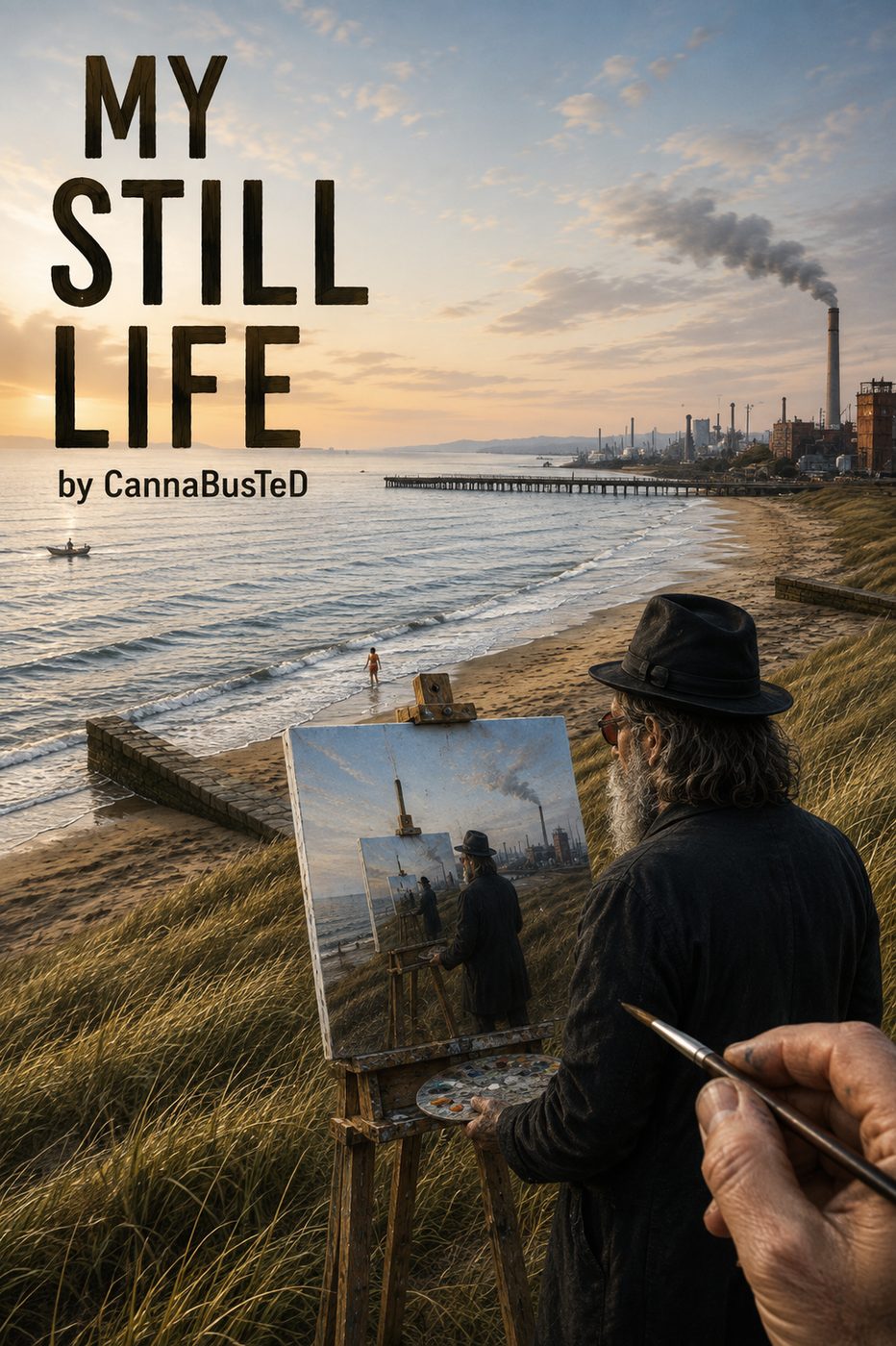
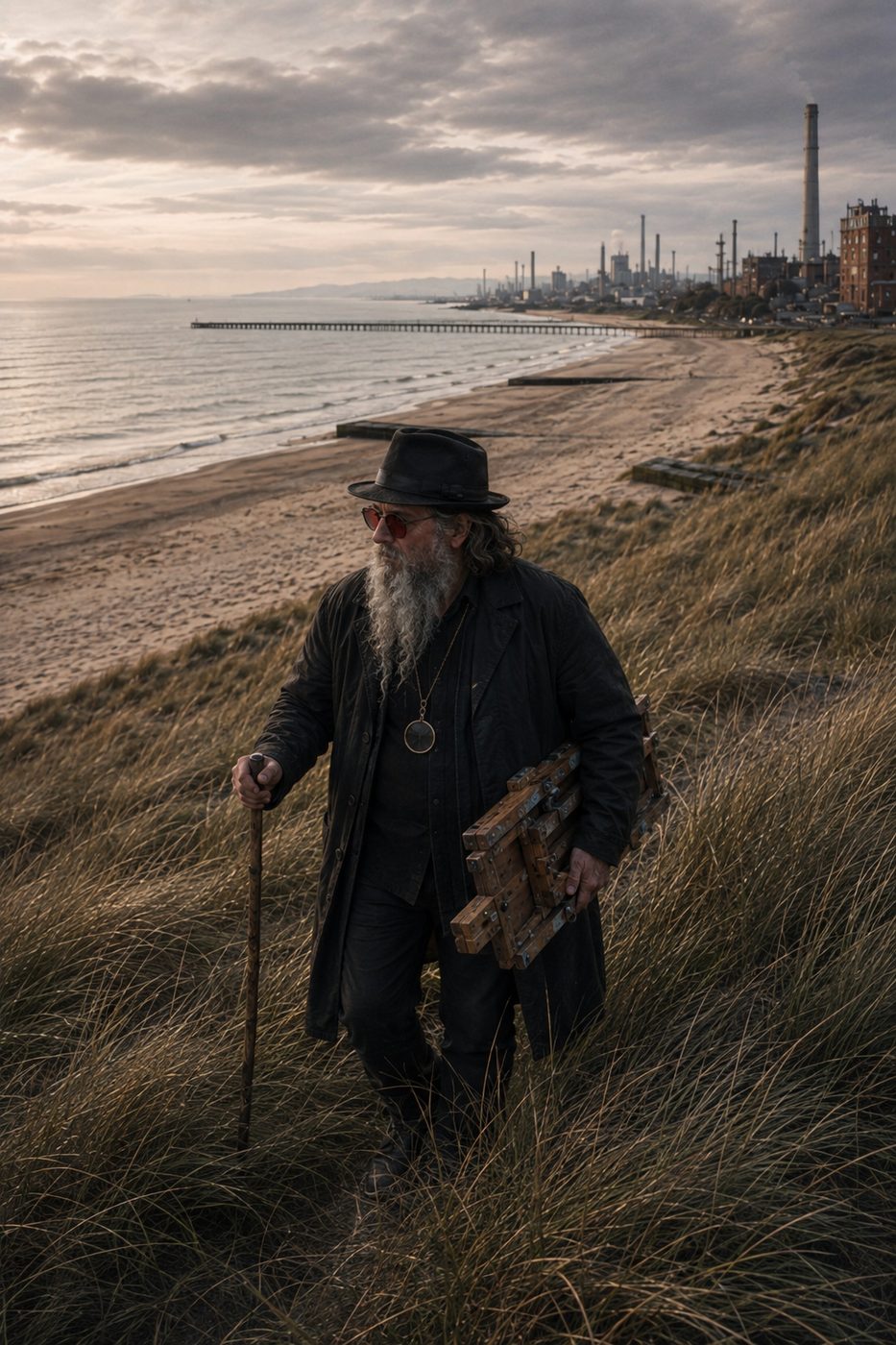
He carried the easel down from the golf course, sideways through the marram grass, letting the dunes take his weight when the sand slipped. Late afternoon. Saturday. The light beginning to lean, and a wind off the North Sea with a bit of edge in it, the kind that goes through a coat without asking.
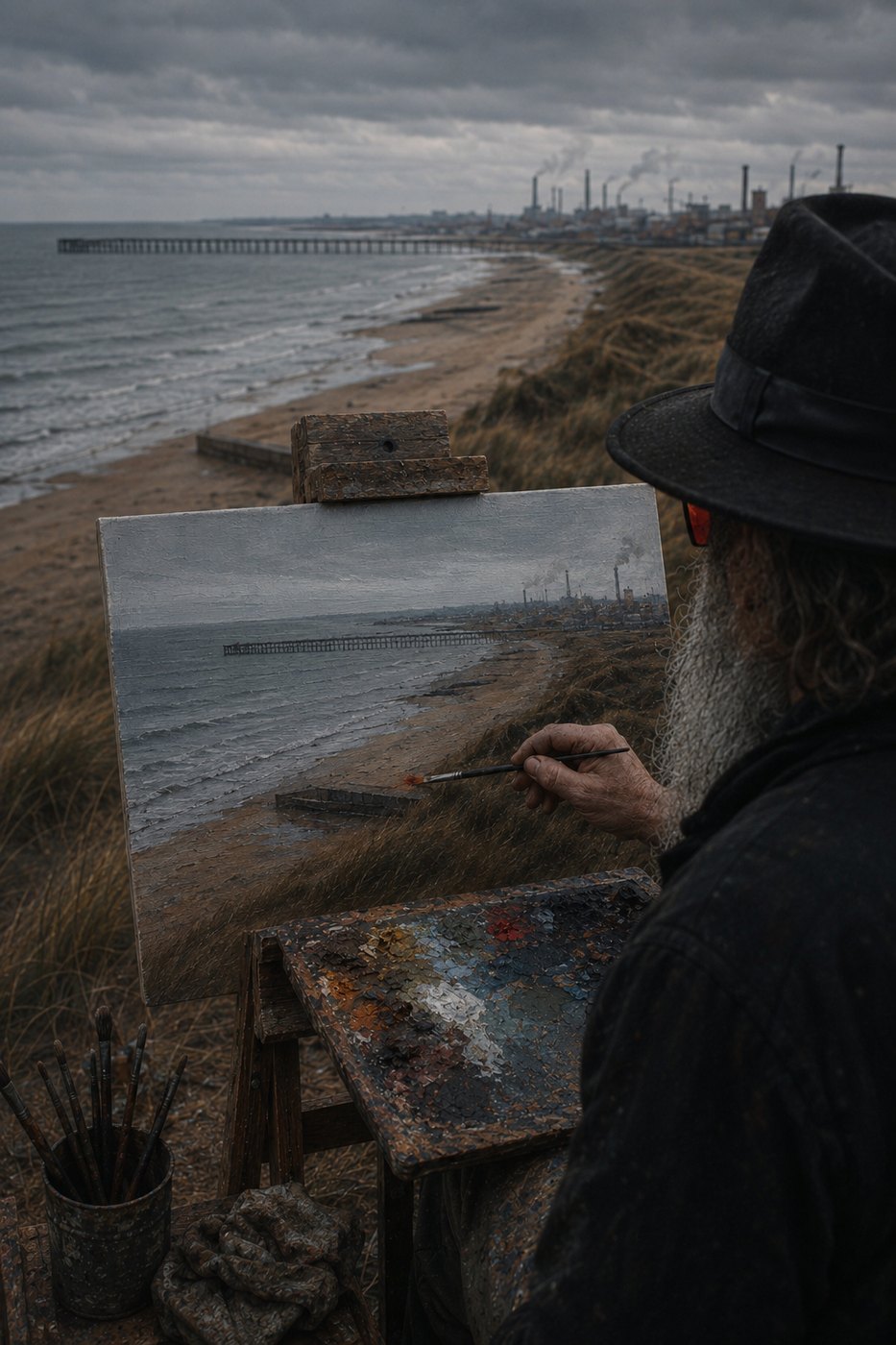
Up the coast, the old colliery villages rolled their hills into the sea. Thirty years after the last cage came up, the coal was still in them, worked into the land like a stain in wood. The hills wore it the way old men wear their trades. In the skin. Past mending. On a clear day you could stand here and see a whole century that nobody had bothered to sweep up.
He set up where the grass gave out, and looked a long time before he mixed anything.
Below him, two squat brick piers held the grey water apart, built for pipes nobody thought about anymore. To the right, the long wooden pier walked out on fifty-foot legs, Victorian-looking, though it had never been for promenading. It had fed a factory that was gone now. The factory had left a footprint. The pier stayed on, gapped and unwalkable, useful mostly to fishermen at the far end, casting into water their fathers were told not to eat from.
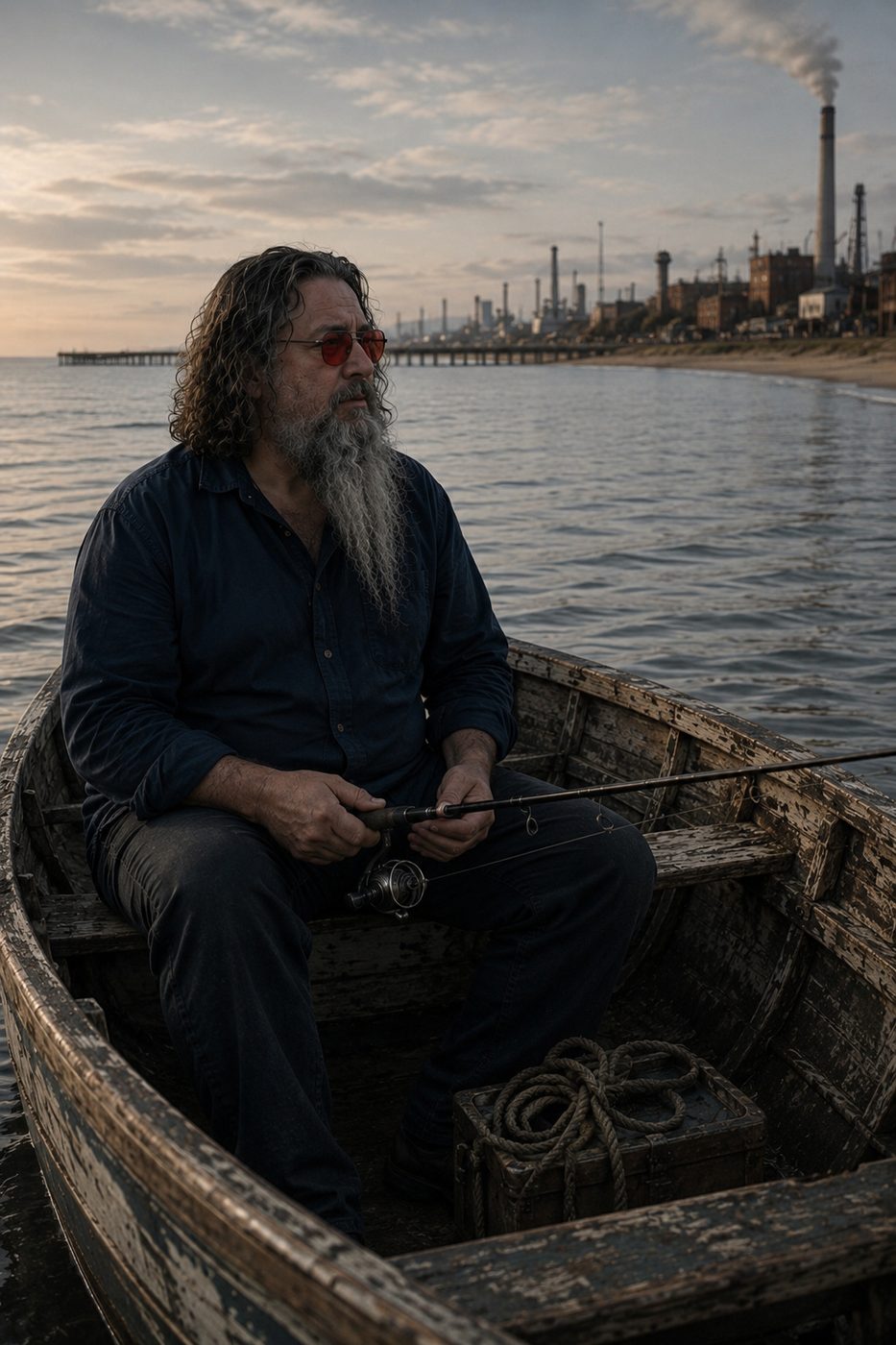
And out past the wooden legs, a small boat sat at anchor. A man in it. Rod out. Line slack.
John had never caught a fish from this stretch and had stopped pretending that was the point. The water had been poisoned so long it had outlived apology. He came anyway. Same as some men stand in doorways at night after everyone is asleep: at the edge of things, answerable to none of it.
Monday to Friday he ran the place — the boats, the berths, the lads, the paperwork that came over from the marina office with somebody else's name at the top of it. He said the right things in the right kitchens and laughed where laughter was required and signed what wanted signing. It was fine. All of it was fine. But by Saturday the fineness sat on his chest like a coat he could not take off indoors. Out here, the coat came off.
The water was the wrong kind of alive — cold, unhelpful, faintly dangerous — and he loved it because it asked nothing of him and told him no comfortable lies. A gull went over, complaining about everything. The line ticked against the gunwale. His hands, careful all week, went loose on the rod.
He knew he was lonely. He would have said it aloud if there had been anyone to hear it, which was, he supposed, the joke. There were people who had his number and people who had his weekends, and somehow no overlap.
But loneliness on water had a different weight than loneliness in a house. In a house it stood behind you while you filled the kettle. On water it sat across from you, decent about it, like an old dog. On water it felt almost chosen.
Almost.
Up on the dunes, Ted clipped the board to the easel. The sea was doing its usual slow argument with the shore, and the sky over the horizon had gone a green he did not fully trust.
Blue first. There was no way around the blue.
She came onto the beach at four o'clock, after the last afternoon people had folded their windbreaks and gone back towards Crimdon and the caravans. The sand belonged to nobody.
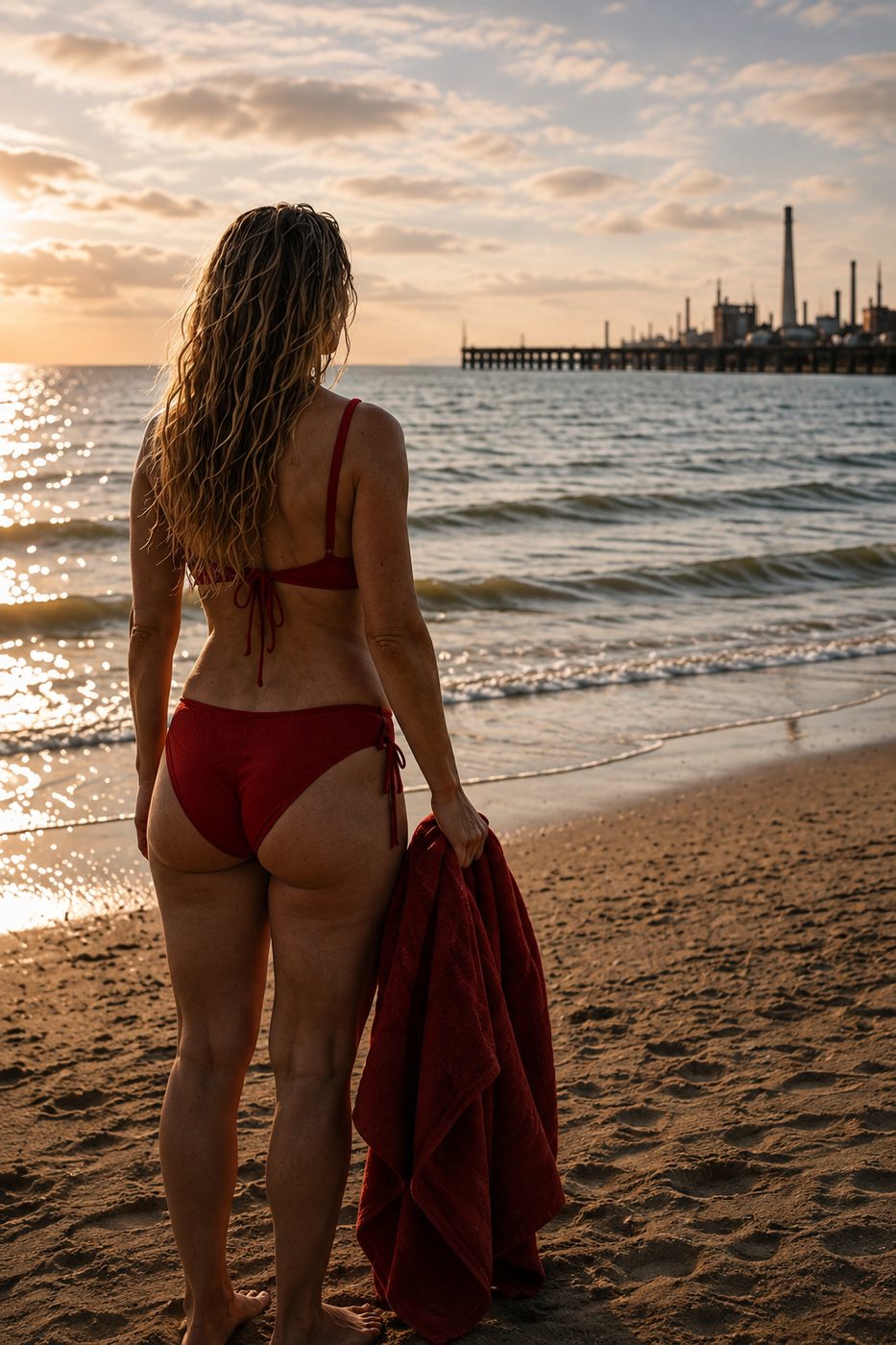
The bikini was red. She had bought it two summers ago and worn it exactly four times, all of them here, on this beach nobody visited, at this hour nobody kept. In the shop mirror it had made her feel like a woman someone might cross a room for. Here, she could be that woman without anybody looking. That was the arrangement she had come to with herself, and like most arrangements of its kind, it held as long as she did not examine it.
She spread her towel like a flag for no country and stood with her toes working into the cool sand. Her car keys went in one trainer, tucked under the towel's corner, the small ritual of a woman who always half-planned her exits.
She knew this water. Knew the pull between the brick piers where the current came round and gathered itself. Everyone local knew. Somebody's uncle, somebody's schoolmate — every family along this coast kept a story about that current, told with lowered voices at barbecues. She could feel the warning under the pretty bit, small and steady, saying you know better.
She went in anyway.
Hope never checks the tide tables.
The cold took her breath, then handed it back changed. For a few strokes she was only a body doing what bodies love, her thinking pushed below the surface where it could not reach her. She was a good swimmer. Her mother had made sure of it, years ago, in the chlorine and echo of the town baths, shouting encouragement from the shallow end in a voice that carried like weather.
The current did not care whose daughter she was.
It had her before she understood she was had — a wide, patient hand drawing her out past the place where her feet had any argument left. She turned for shore and swam. The shore did not come closer. She swam harder. Still nothing.
The beach just sat there with her towel on it, her keys in her trainer, her whole ordinary life fifty metres away and receding. Fear threaded itself through her, thin and cold, and she did what the leaflets say and almost nobody does.
She stopped fighting it. She turned side-on and shouted.
The wind took most of it.
Not all.
Out past the pier, John heard something under the gulls that was not gulls.
He looked to the beach and found it wrong. The red he had noticed earlier — noticed the way you notice a poppy in a ploughed field — was gone from the sand. He stood in the boat, one hand on the rail, and read the water the way a life of it had taught him, and eleven years of Saturdays on top.
There. Out where nobody floated on purpose. An arm going up.
He did not decide. Deciding is for situations with time in them.
The rod went down. The coat came off. He was over the side into cold that hit like a verdict.
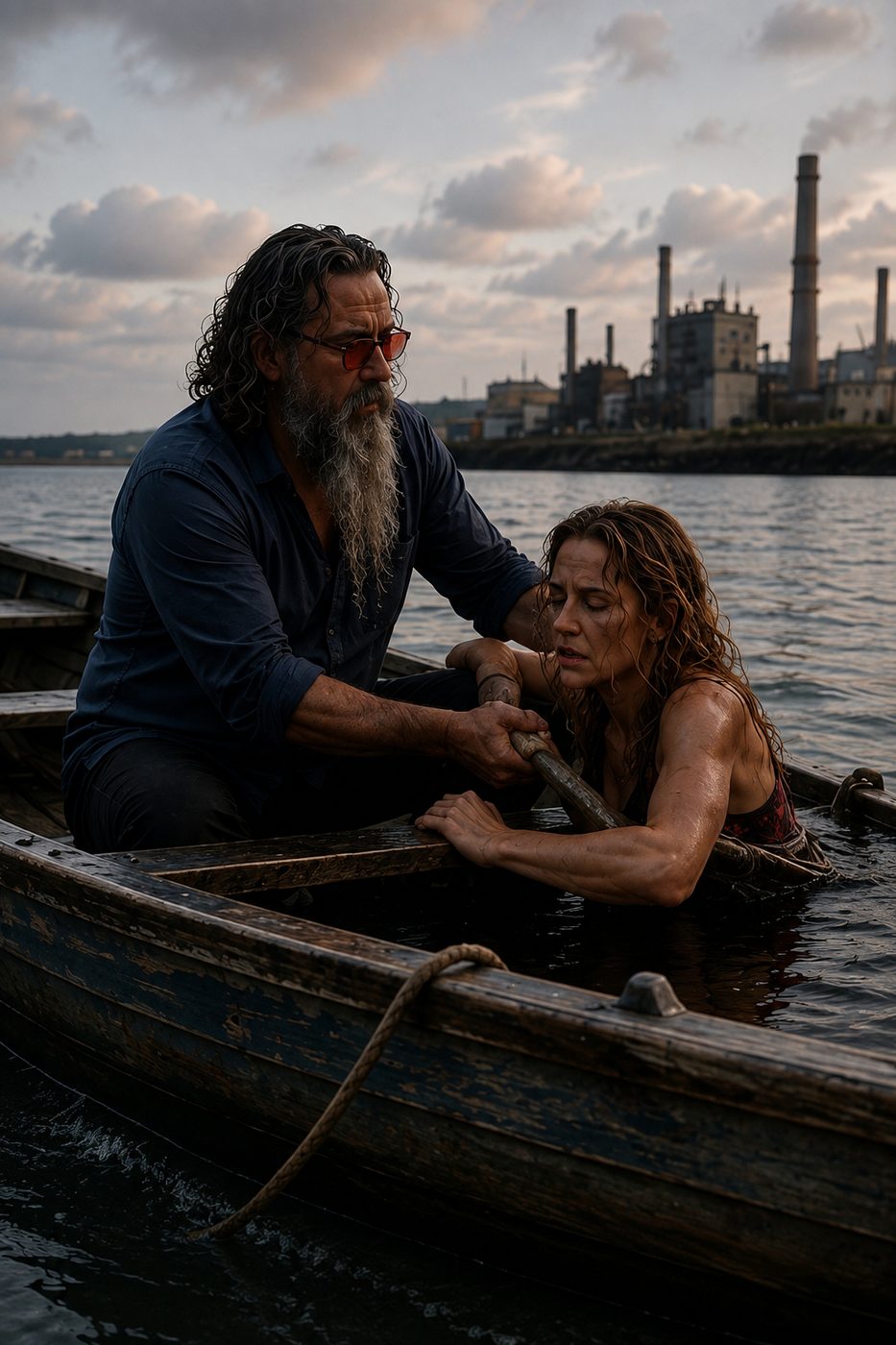
He was not a strong swimmer. He was a stubborn one, and today that would have to be the same thing. The distance to her was shorter than it looked and longer than he had. Every stroke, the sea put a shoulder against him, casual, like a crowd at closing time. He reached her with his lungs full of knives, salt already in his throat, and got an arm across her the way you are told to. She grabbed him with the terrible strength of the drowning.
He talked to her. Nonsense at first. Then, "All right, love, I've got you, all right."
He did not know her name, so love had to do. Slowly the clutching became holding.
The shore looked close.
The shore was a lie.
He could feel the current under them both, patient as ever, and understood in his stomach that the sand was the direction that would kill them. He turned them for the boat.
It sat small and far and indifferent on the swell. He swam for it the way you pay off a debt — not in one act of strength, but in instalments, each one costing more than the last.
Her hands found the hull.
The rope was where rope always is. He got it under her arms and made it fast to the thwart, a knot his hands did without him, and that bought him the half minute it took to haul himself over the side. His arms had gone past pain into ringing. He pulled her in on the rope and on the roll of the boat, and it dipped and took water and came back up, and she came over the gunwale in a way that would bruise, and they lay in the bottom among bait smell and wet line, coughing, alive, absurd.
Above them, the sky carried on with its clouds as if nothing had been asked of it.
He wrapped her in his towel. It smelled of him and every Saturday he had spent alone out there. She held it at her throat and shook. He sat across from her, not knowing where to put his eyes, and rowed them in slowly, because his arms were finished and because neither of them seemed desperate to reach the part where strangers thank each other and leave.
On the dunes, Ted had watched it all with a brush going dry in his hand.
He had seen the red stop being a colour and become a flare. He had seen the boat empty itself of its man. There was nothing he could have done from up there — true enough — with half a mile of dune and slack water between his hands and any use they could be.
So he did what his hands knew. He witnessed.
Now the boat came through the shallows. The man helped the woman into the last of the light, both of them moving like people who had been given their bodies back and were not sure of the fit yet. Ted picked up the brush again.
He gave the sand its cream and beige. He gave the hills their coal. He put the wooden pier in on its long legs and set the boat back on its mooring. Then, small, near the waterline, he made a fire that had not been lit yet.
Below him, it got lit.
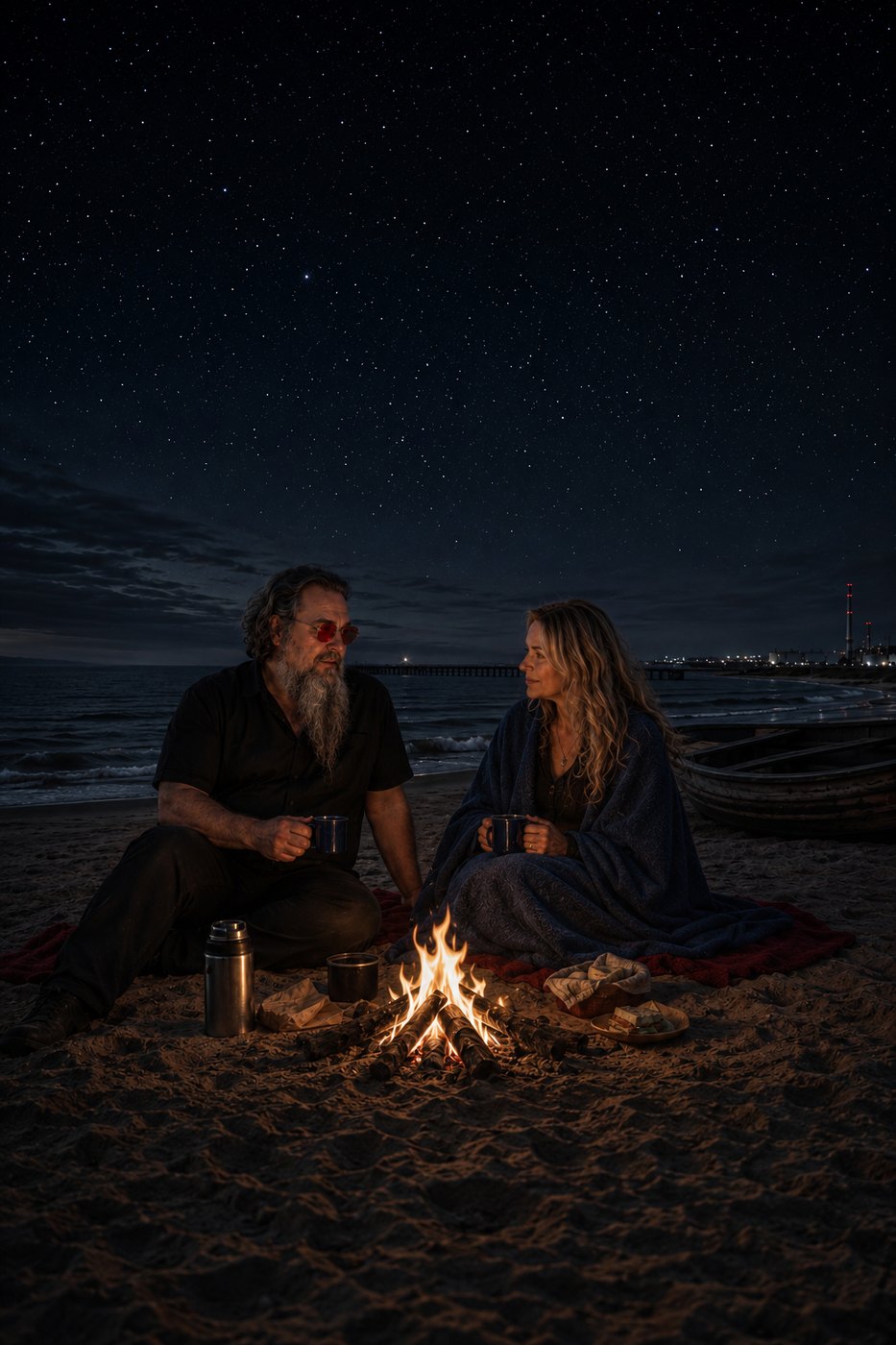
John gathered driftwood from the tideline, bone-white and salt-cured, and built the fire the way his father had built fires, and his father's father, back and back, one small competence handed down through all the big failures. The woman crouched with him out of the wind, towel tight around her shoulders. A spark took. Salt came up out of her in a cough that broke, halfway, into laughter — ragged and real, with the sea still in it. He laughed too. After that it was easier.
The sun went down over Crimdon without ceremony, and the sea forgot. Whatever it had tried that afternoon, it wore its flat evening face now. Butter wouldn't melt.
The two of them sat close to the fire and closer, by degrees, to each other. They talked the way people talk when the worst part has already happened and left them both standing — no small talk left, all of it drowned on the way in. He learned things about her that men she had known for years had never got near. She learned that he came here every Saturday, and did the sum out loud — all those Saturdays, this empty beach — and he shrugged, and neither of them said the obvious thing, which made it louder.
He never did get her name. It never seemed like the right moment to break what was working.
Stars came out above the dead pier like they had been dragged there.
From the dunes, at that distance, Ted could not hear the words. Only the shape: two figures, one fire, the dark coming down kindly for once.
He put the last of the light into the painting. The fire took three colours — red at the heart, where the wanting goes. He worked until he could not tell brushstroke from dusk. Then he stopped and stood back.
Two lonely people, warm.
He knew them. Not by name. By weight. The man at the edge of things. The woman in her best hope.
The only part his hand refused was a place beside the fire.
Down on the beach, one figure said something. The other laughed. The sound came up the dunes thin and bright, like light under a door.
Ted wiped his brushes on an old rag and folded the easel under one arm. The sand gave way underfoot as he climbed, taking a little of each step for itself. At the top, where the marram grass began and the golf course lay flat in the last grey, he turned once.
The fire was small from up there. Small, and completely warm.
The painting turned out beautiful.
Then he went home.
Saturday Night, Sunday Morning
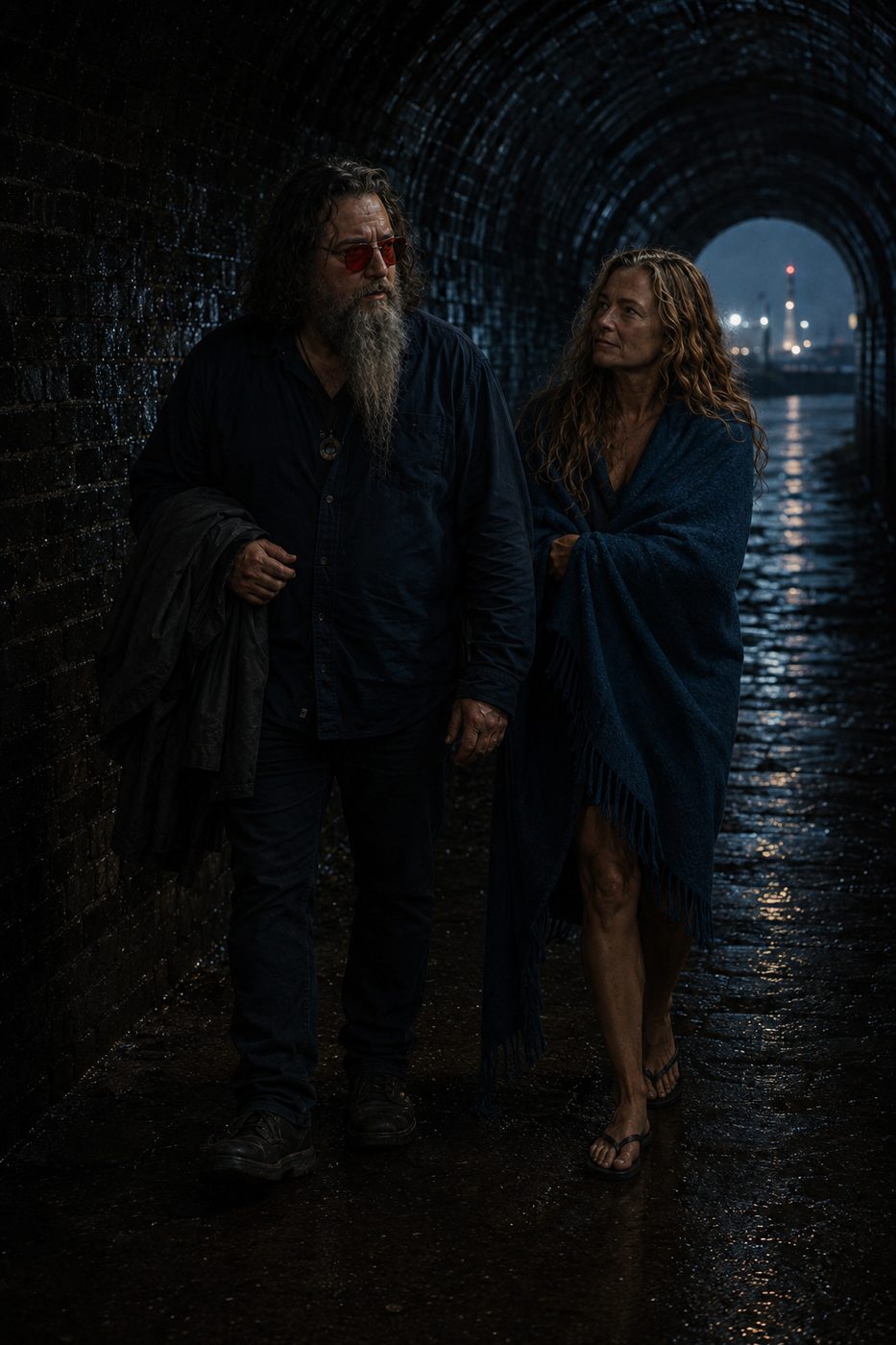
The fire had gone down to its bones, and neither of them had said a word about going long after home was the only thing left.
"Well," John said, finally, to the sea.
She handed him his coat and kept the towel, and he opened his mouth to say something about the towel, and then didn't. And that was that settled. Warm things stay where they're needed. Even a man who talks mostly to fish knows that much.
"Thank you," she said. For the fourth time.
"Anybody would have."
Nobody else did.
He looked at his boots. Out past the wooden legs of the old pier, the water shifted and settled, innocent as anything, the way it always is, afterwards.
They went up the beach together, because there is only one way off it — through the tunnel under the train tracks, a curve of soot-black Victorian brick that has been taking people's voices off them for a hundred years and giving back drips. Their footsteps agreed with each other for a while. Then the tunnel ended, the way tunnels do, and the night was standing there waiting, with the works on its left.
The factory skeleton had its usual audience of nothing. Thirty years shut, and it still turned up.
Home was two directions. Of course it was.
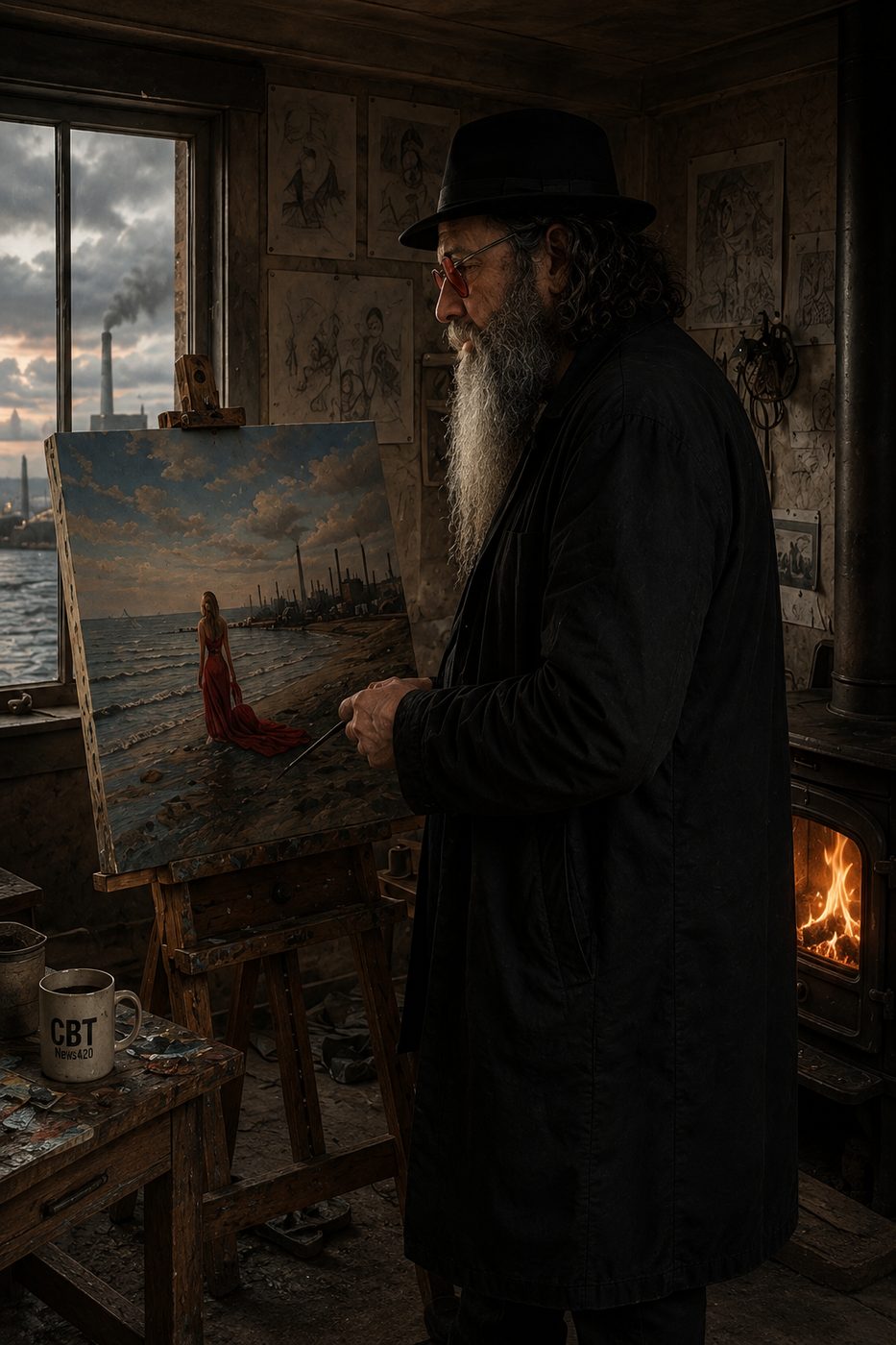
She went north. He went south. She turned round once, early, to fix the shape of him walking away — and got it. He turned round once, late, after her street had already taken her, and got the works, and the dark, and a chip paper going along the pavement on its own business.
He stood a minute anyway.
The chip shop on the corner was doing its Saturday trade, four deep, everybody's night out ending in the same warm light.
"Owt on the boat?" said the man behind the counter, who asked every week and had never once been listening.
"Not tonight," John said.
Which was true in every way available.
Salt and vinegar found the raw skin of his hands and let him know about it. The sea's little signature. You can leave the water, but it initials you on the way out. He ate walking, out of the paper, the way food tastes best and loneliest, and let himself into a house where the hallway light had been left on since Thursday by a man who told himself it was for burglars.
One chair in the front room knew his shape. The other one was for keeping the newspaper on.
He sat down, and found that he was smiling at the fire that wasn't in the grate. And stopped. And checked the smile the way you'd check a strange noise in an engine, and couldn't find anything wrong with it.
Bed, then. Up the stairs at an ordinary speed. He slept the whole night through, and didn't know yet that it was the start of a run.
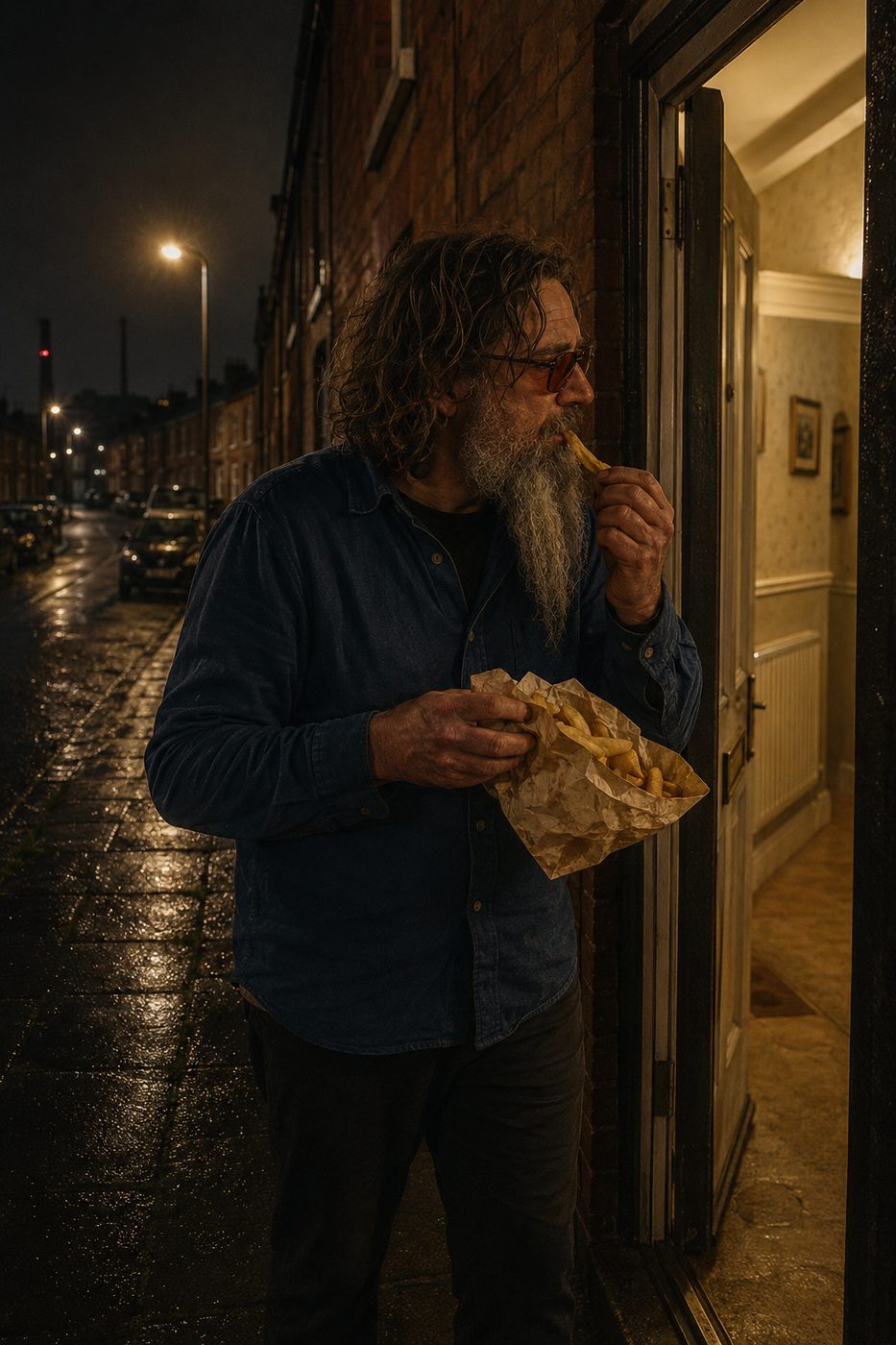
Her flat was above a shop that sold nothing now. Two flights. Thirty-one steps, and she knew it was thirty-one — and she'd climbed them tired in every way a person can be tired, and tonight was a new one. Tired like spent. Like used for something.
The bikini went in the sink. Crimson under the tap, going dark, the water round it clouding with sand and the beach coming out of it in slow turns, and she stood watching, and thought about being pulled backwards by the sea, and made herself keep watching until the water ran clear.
His towel went over the radiator. Blue. Bald in one corner. Somebody's name-tape stitched along the hem, gone unreadable with washing — a mother's work, decades back, outliving whatever it was for.
She should have given it back. She'd meant to. Somewhere between the fire and the tunnel, the towel had simply stopped coming up in conversation. And now it was here, steaming faintly in a stranger's bathroom, the only proof in the flat that Saturday had happened.
Salt in her hair, still. She decided the shower could wait for morning. And couldn't have said why. And didn't make herself say why.
She slept with the window cracked, so the sea could come in a little.
Long breaths. In her sleep, even. Like something in her was still counting, and had decided to keep going on its own.
Sunday came up soft and couldn't commit.
No fishing. The first day off in living memory that John hadn't rowed out on principle. The boat could sit down there on the sand and think about what it had done.
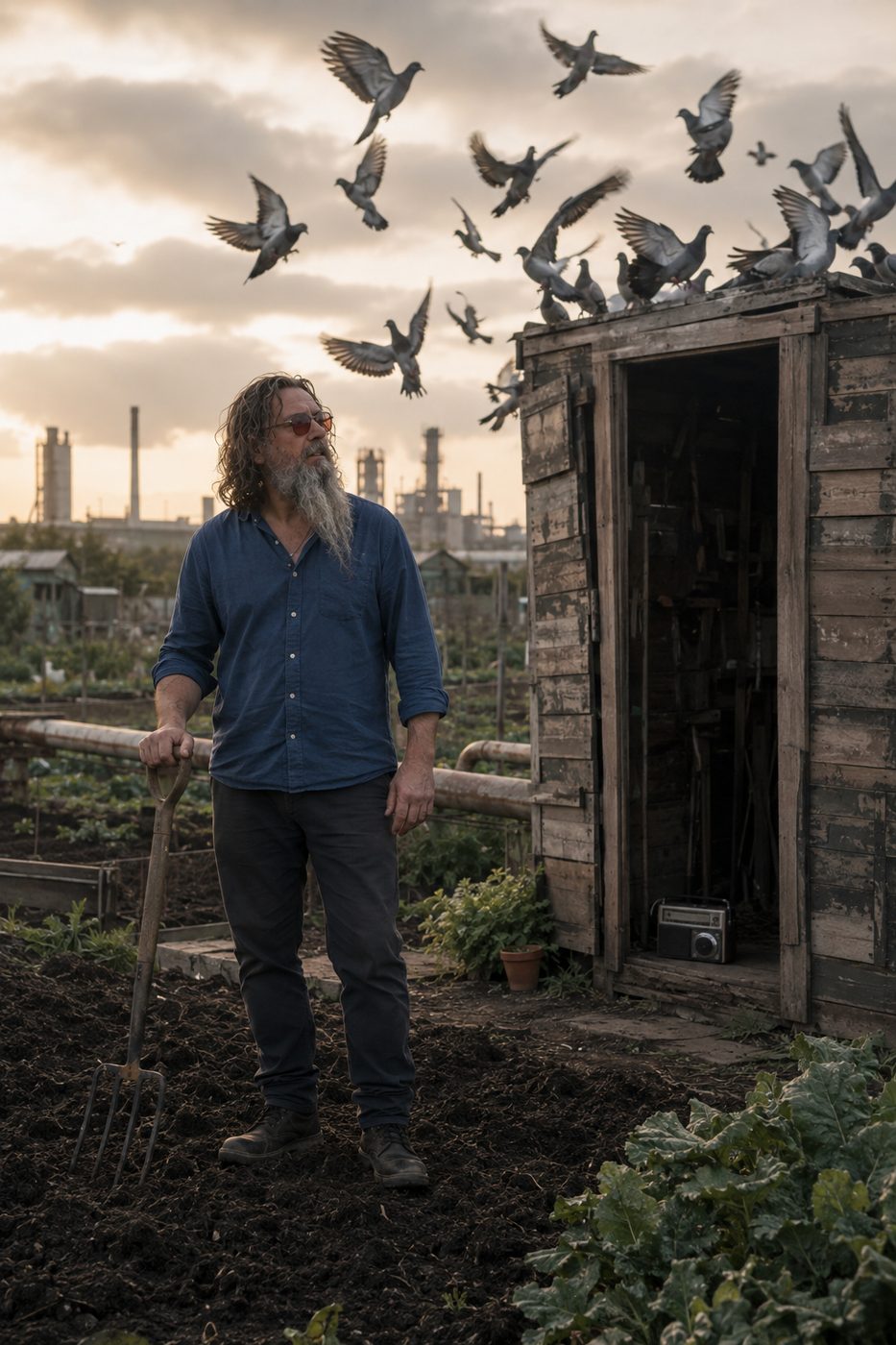
The allotment was six gates along the path, gravel where it wasn't mud, with the old pipes running the length of it on rusted legs — reservoir water, never the mains, never once in a hundred years. His was the one with the shed his grandad built out of arguments and pallet wood. Dave was already up at the loft turning his pigeons out.
"Why do they call it a loft," he said to the birds, "when it isn't upstairs."
A thousand times, that one. John had heard it in every weather there is, and once through the week they buried Dave's wife. Not a laugh out of a pigeon yet.
The birds went up off the roof like a shaken sheet, wheeled once over the works, and set off wherever pigeons go to prove a point.
"They'll come back," Dave said, the way he'd said it for forty years, to nobody who'd asked.
The ground was ready. John dug. Football on the radio in the shed doorway — he wasn't bothered who won, it was voices, and it was Sunday — and the fork went in, and turned, and the smell came up, that dark, wet, older-than-everybody smell that says keep going.
Late again with the potatoes. Good Friday, his grandad's law, and here he was, two days over. The old man would have had something to say about it. And John found the old man's exact voice saying it in his head, and laughed. Out loud. Alone. Over a trench.
It felt like the first one that had got all the way out in years.
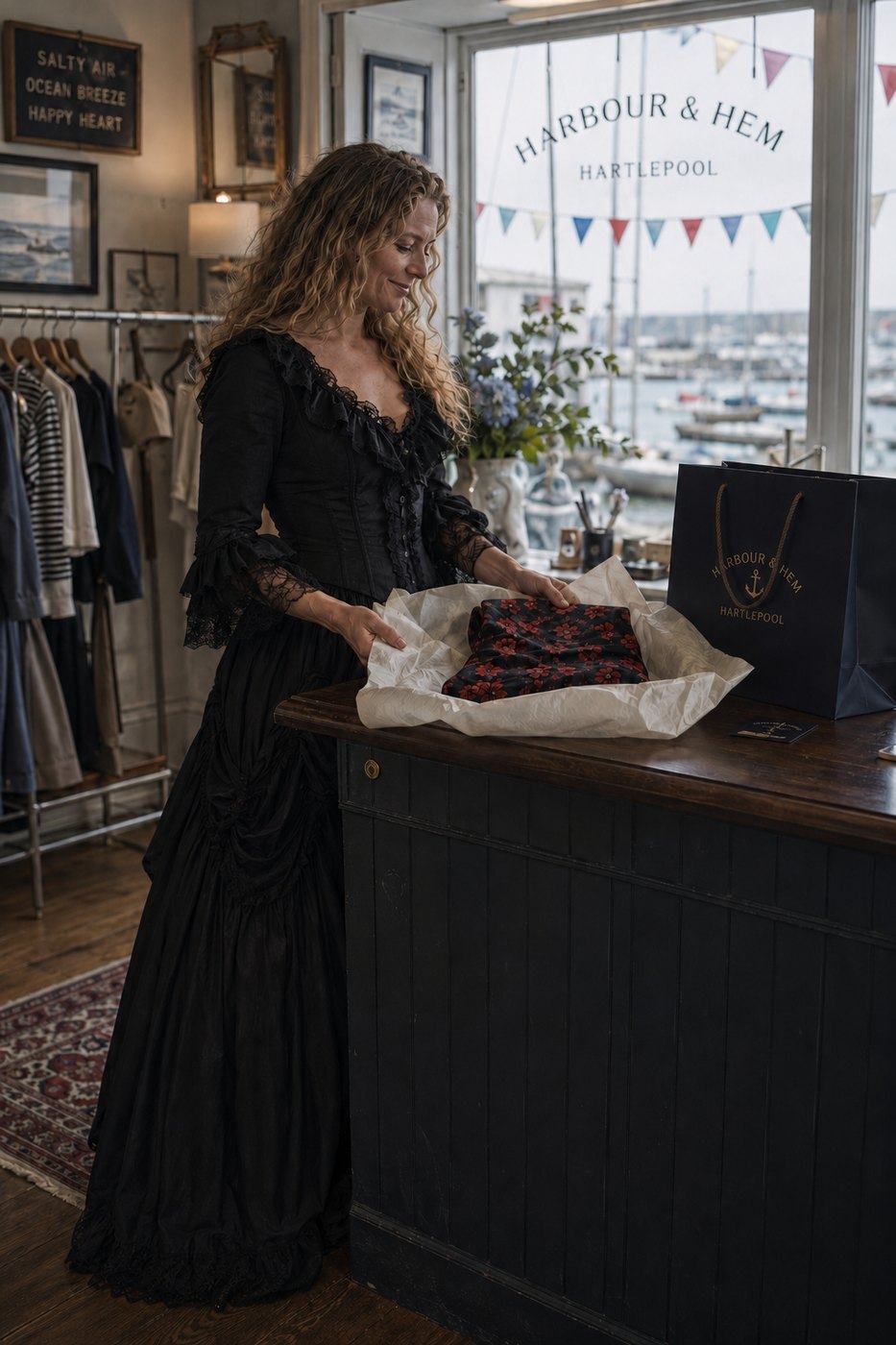
A robin came down onto the fork handle the moment he let go of it. They stand about a foot from a working spade all their lives, robins. Bold as brass over turned earth. Closest thing digging has to company.
Dinnertime, he sat on the bench with the flask, and the pigeons came back — Dave's sheet un-shaking itself onto the roof — and the match ended in a way that would keep the town arguing till Tuesday. And John took his phone out, and looked at it.
Full signal. Nothing doing.
Nobody to tell. That was the situation.
He put it away, and finished the tea, and filed the situation somewhere that had stopped being comfortable on Saturday, around the time the sea coughed a stranger's laughter into a fire he'd built with his own hands.
Across town, she hadn't planned on shops. But it was Easter Sunday, and the town would be shut tight as a fist — the marina was the only place open, boat festival weekend, the one Sunday of the year the quay put its stalls out and pretended to be somewhere further south.
Her feet had a majority. She went.
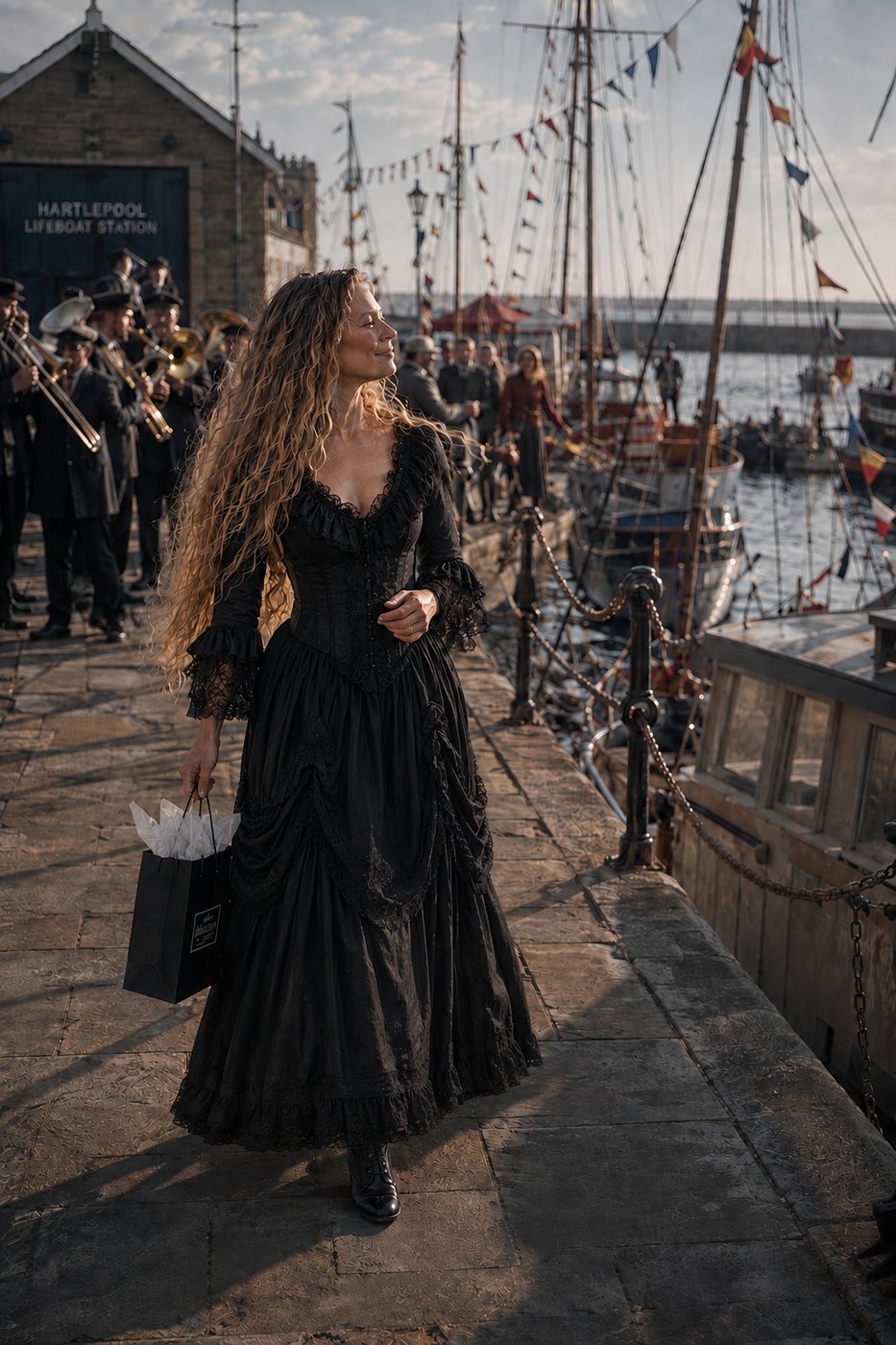
Bunting between the masts. Hulls up on trestles getting admired by men with their hands behind their backs, and a brass band unpacking itself near the lifeboat station with the unhurried confidence of men who know the afternoon is theirs.
Over by the stalls, a small girl was opening negotiations over an Easter egg. The one with the mug. Not the one with the buttons — the mug — and the mug ones had gone by ten.
"Tomorrow, then," said her mother, in the voice that means we'll see.
The girl accepted the terms. She'd be raising it again.
The boutique at the quay end had the red on the back wall. Not crimson. Past crimson. Lingerie the colour of the exact thing you'd never say out loud in this town.
She stood in front of it the way you'd stand in front of a window with a view in it. And then it was over her arm, and she was at the till, and her heartbeat was carrying on like this was a thing they did.
"Special occasion?" said the assistant, folding tissue round it.
"No," she said.
And paid. And meant it. And walked out with the bag swinging — hope in a shade the weather hadn't sanctioned, bought for an audience of none, and none, for once, being exactly enough.
The long way round the harbour, past the festival boats sitting on the tide — all of them looking briefly, stupidly, like a boat she'd held onto once in her whole life. And none of them being it. And her not admitting a single word of any of this to herself, the entire length of the quay.
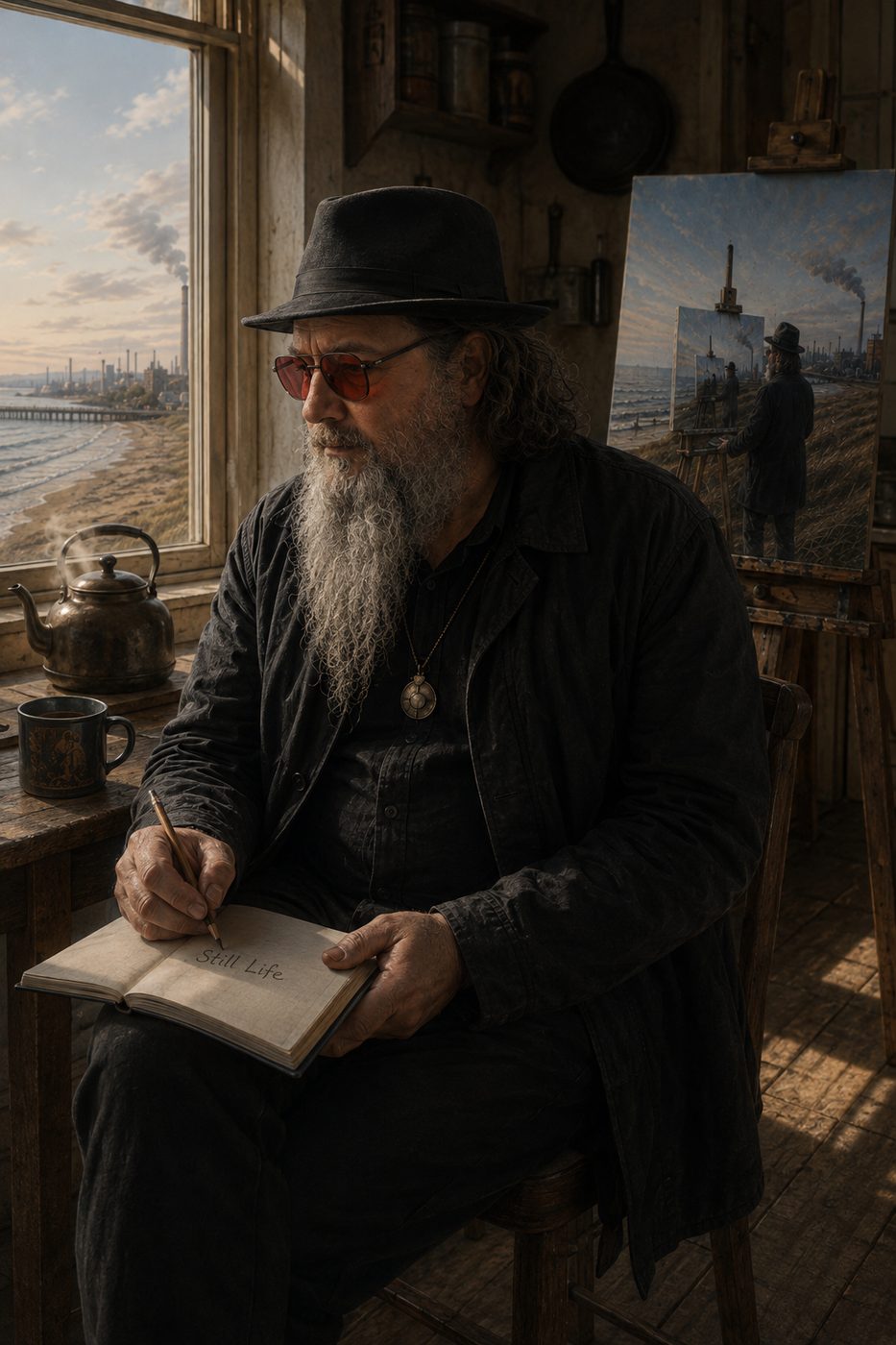
Mid-afternoon found Ted where mid-afternoon usually found him, in the chair by the window with the light going through its slow arrangements on the floor.
The painting stood where Saturday had left it, and he let it stand. Some things you don't go back into. A man who touches a finished thing is a man who doesn't trust it.
But his hands wanted something.
The notebook came off the shelf — the kitchen one, half a song beside every idea he'd ever abandoned — and he sat with it open on his knee and a pencil going soft at the tip, and he went back to the beach the only other way he knew how.
Cream sand, he wrote. Going beige.
Crossed it out. Wrote it again.
The tide had been in his ears all day. There was a song somewhere in Saturday — he could hear the shape of it walking about behind the wall, trying doors. Two brick piers holding the grey apart. The wrong kind of alive. A word for what red was doing on an empty beach, that wasn't any of the words for it.
An hour went by at the speed of three lines.
Painting forgives you faster, he told the notebook. The notebook took it in good part. They'd been through worse.
By the time the light moved off the floor and up the wall, there was half a page that would embarrass nobody, and a title at the top of it, underlined twice, with a little tremor in the second line that hadn't been in the first.
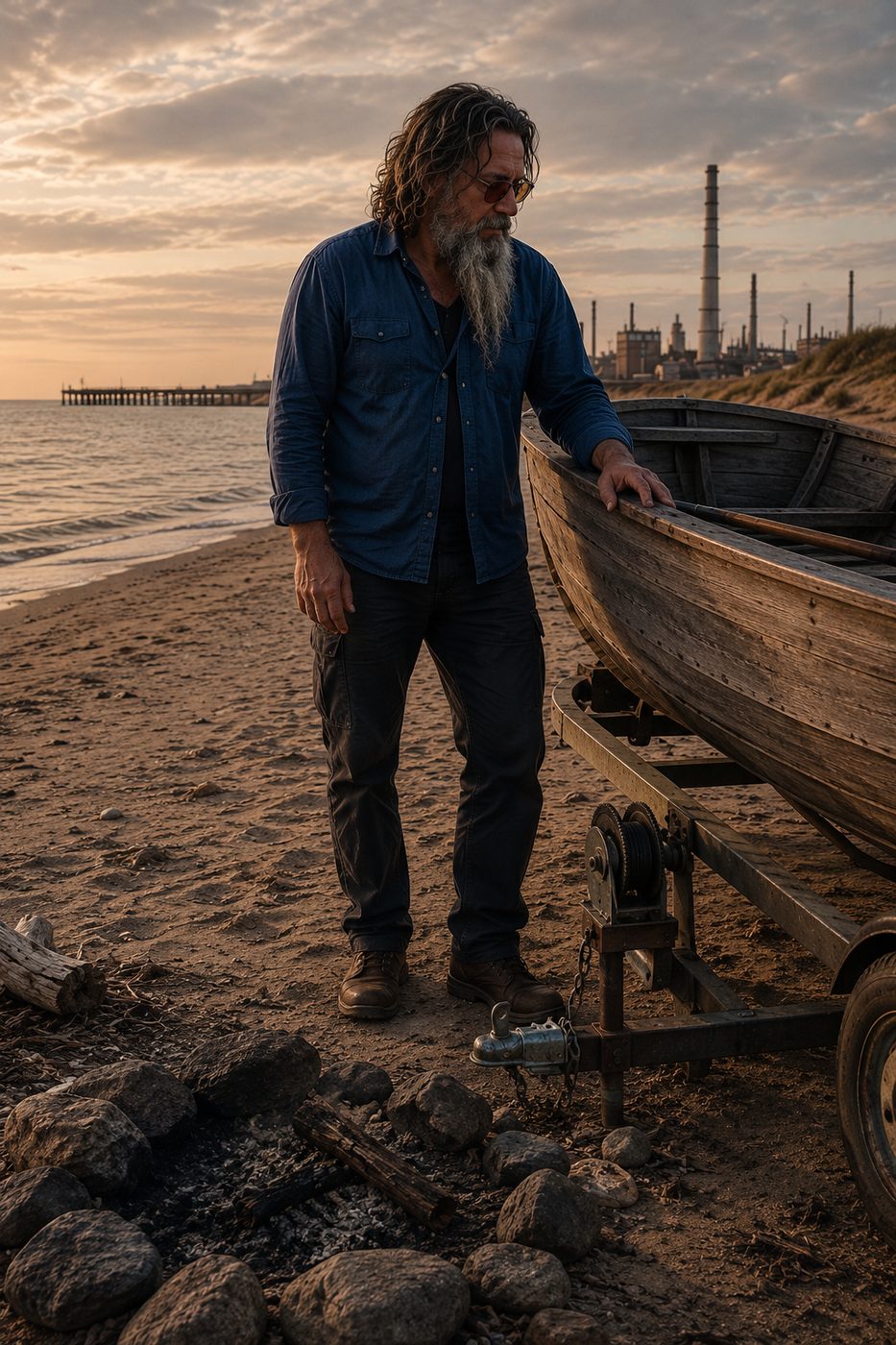
Still Life.
He put the kettle on and stood at the window while it worked itself up, and out along the coast the sea kept the beat going without him.
The tide was right at five, and John went down for the boat.
Through the tunnel — his voice came off him, the drips came back — and out onto the sand with the evening starting to think about it. The beach had gone back to cream going beige. The fire ring was still there above the tideline, grey ash and charred driftwood, one day old and already looking like archaeology.
He stood over it a minute.
Just stones and ash. That's all it was. Stones, and ash, and the exact spot where a towel had gone round a shaking stranger, and the sea had coughed her laughter out into the dark, and the stars had come out like they were dragged there.
Stones and ash. Anyway.
The boat had sat where he'd hauled it, up past the high-water mark, patient as furniture. He walked round her once, the way you do — checked the hull where the woman's hands had held it, and found himself checking that bit of gunwale longer than the rest of the boat put together, and stopped that, and got on with it.
The trailer hitched. The winch did its slow work. And rolling her up the beach, he passed the fire ring one more time, and the last of the sun was lying along the sand at the low flat angle that makes everything look like it's been painted, and for no reason he could have given in words, he looked up at the dunes.
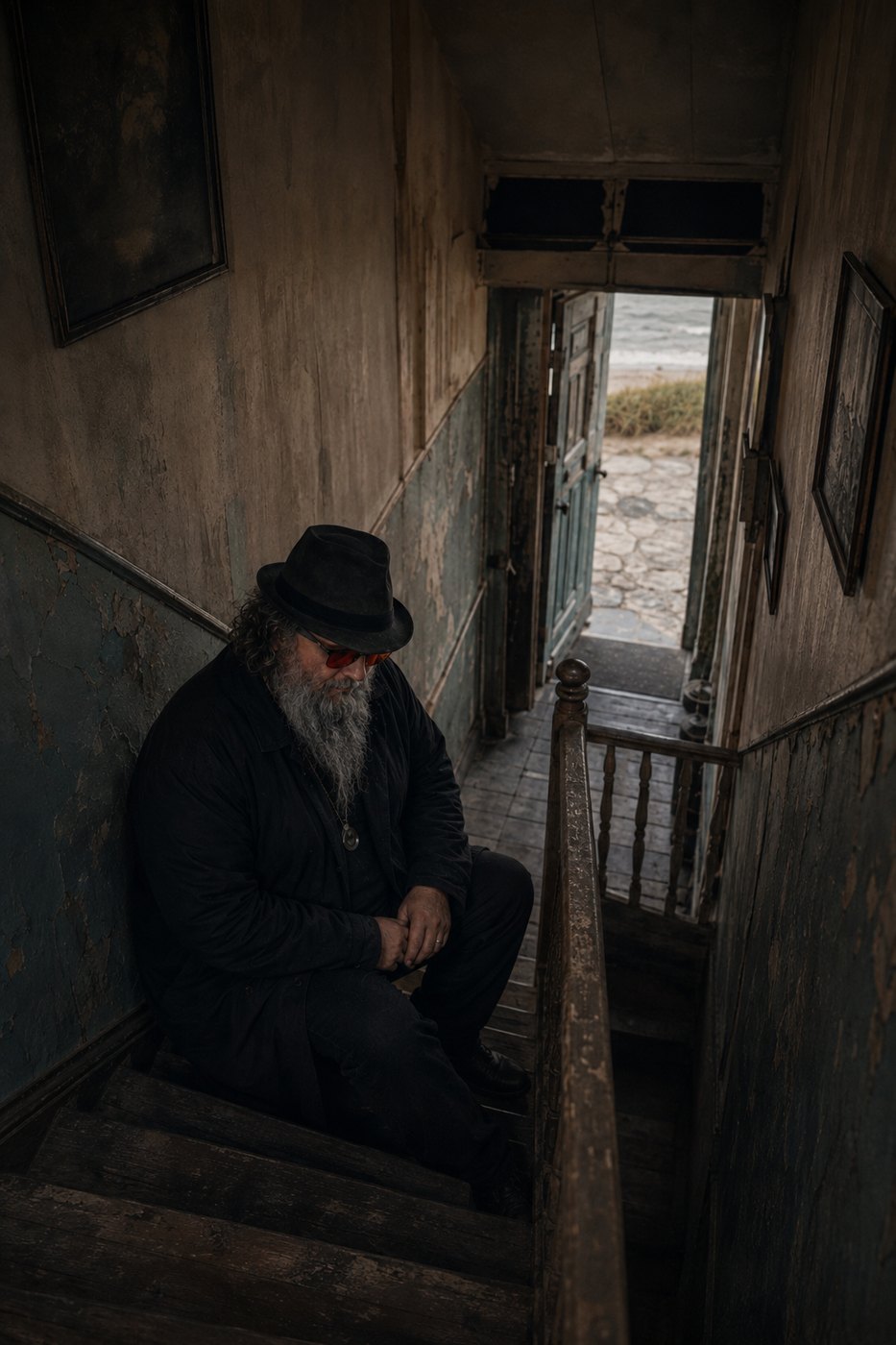
Empty. Grass giving out. Nobody there.
Felt looked at, all the same. Had done, all weekend. Not watched — looked at. There's a difference, though he couldn't have drawn it.
He took the boat home through the tunnel, and the drips applauded one at a time.
The flat got the last of the light on a good day, and Sunday, having finally committed, was going out generous.
She'd eaten. The plate was washed. The towel sat folded in its square on the kitchen table, ready for an address that didn't exist. And the tissue-paper bag stood on the chair where she'd set it down, and she'd walked past it four times, and on the fifth she gave in.
She laid it out on the bed. Red on a white cover.
Didn't try it on. Just looked. The way he'd looked at the sea before mixing anything — though she didn't know that's what she was doing, or whose method it was.
The sea had handed her back — wet, coughing, alive, laughing — and nobody had said what for.
She sat on the edge of the bed next to it, and let herself do the thing she never did.
Forward. Just forward. Nothing grand. Not weddings, not white sand somewhere hot. Smaller than that, and bigger — a kitchen with two cups going. Somebody's boots drying by somebody's door. Being asked how the day went by a voice that wanted the long answer. A summer — this one, the one getting ready off behind the light — with her actually in it, down at the water in daylight, swimming because she wanted to and not because the wanting had teeth.
Learning to trust the current. Or at least learning which ones to.
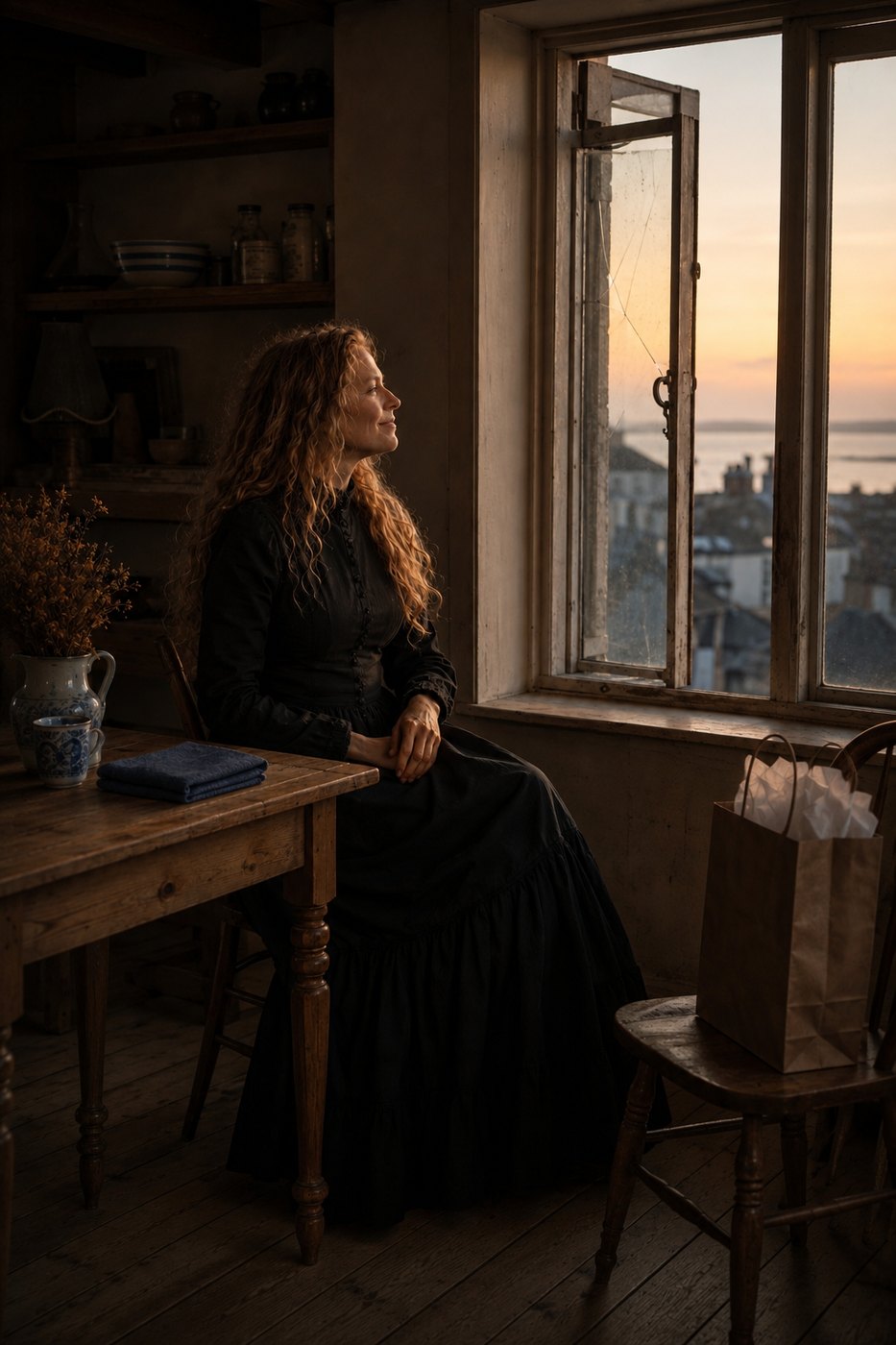
She'd wear it when there was a reason. She'd know the reason when it happened. Something was coming — she could feel it the way you feel weather before it arrives, pressure on the skin, nothing you could report.
Monday, she thought, was going to be a good day.
She put the red away in the drawer, still in its tissue, keeping. And went to sleep with the window cracked, so the sea could come in a little.
High water came in at eleven, and went over the fire.
No ceremony about it. The ring of stones, the charcoal, the grey wing of ash — the sea took the lot in about four visits. Patient. Thorough. The way it does everything. By morning the beach would be cream going beige again, with no opinion on the matter.
The sea forgets the whole thing happened. It's the one thing it's never once failed at.
Twelve streets apart, with the works skeleton standing between them holding nothing up, two lamps went out within a minute of each other.
A folded towel on a kitchen table, nowhere to go.
Red in a drawer, in its tissue, keeping.
Half a song in a kitchen notebook, underlined twice.
And in a front room out along the coast road, in a house gone quiet enough to have furniture of its own, two small strangers sat by a fire that the tide couldn't reach. Completely warm. Exactly as warm as they'd been made.
The only place on the whole coast where Saturday was still burning.
Nobody knew it was there.
Warmth rarely advertises.
Monday
Monday came up bright and cold, the sun out and the chill still in, the way spring does it on that coast — warmth promised, not yet paid.
Ted's house had been quiet so long the quiet had furniture of its own. It took him in the way it always did. The kettle went on. The radio kept up its low murmur of voices that had nothing to do with him, which was the arrangement. The window gave him the first of the light, and he stood in it with his coffee, and the house held still around him the way it had held still around him for thirty years.
The painting stood on the easel where Saturday had left it.
There was nothing left to touch. The fire in it was two days old now, and still the warmest thing in the house. The two of them sat by it, warm, mid-laugh, fixed like that for as long as paint holds. The looking did what the looking always did, and he let it.
Daffodils.
The thought got him his coat. A little yellow, low on the left, where the beach grass began. Spring in the corner of it. The rest could stand as it was.
The buttons made work for his fingers, and the cold took the blame. The stairs took longer than the stairs used to, and Saturday took the blame for that — all that sand, all that carrying.
An old man's accounting: everything filed somewhere comfortable.
Outside, the air had the sea in it, sharp as a clean sheet. The sun was making its offers. April offers, and he was old enough to know what those were worth, and he took them anyway. Summer was coming. You could feel it getting ready, off behind the light somewhere.
Maybe this one would be his.
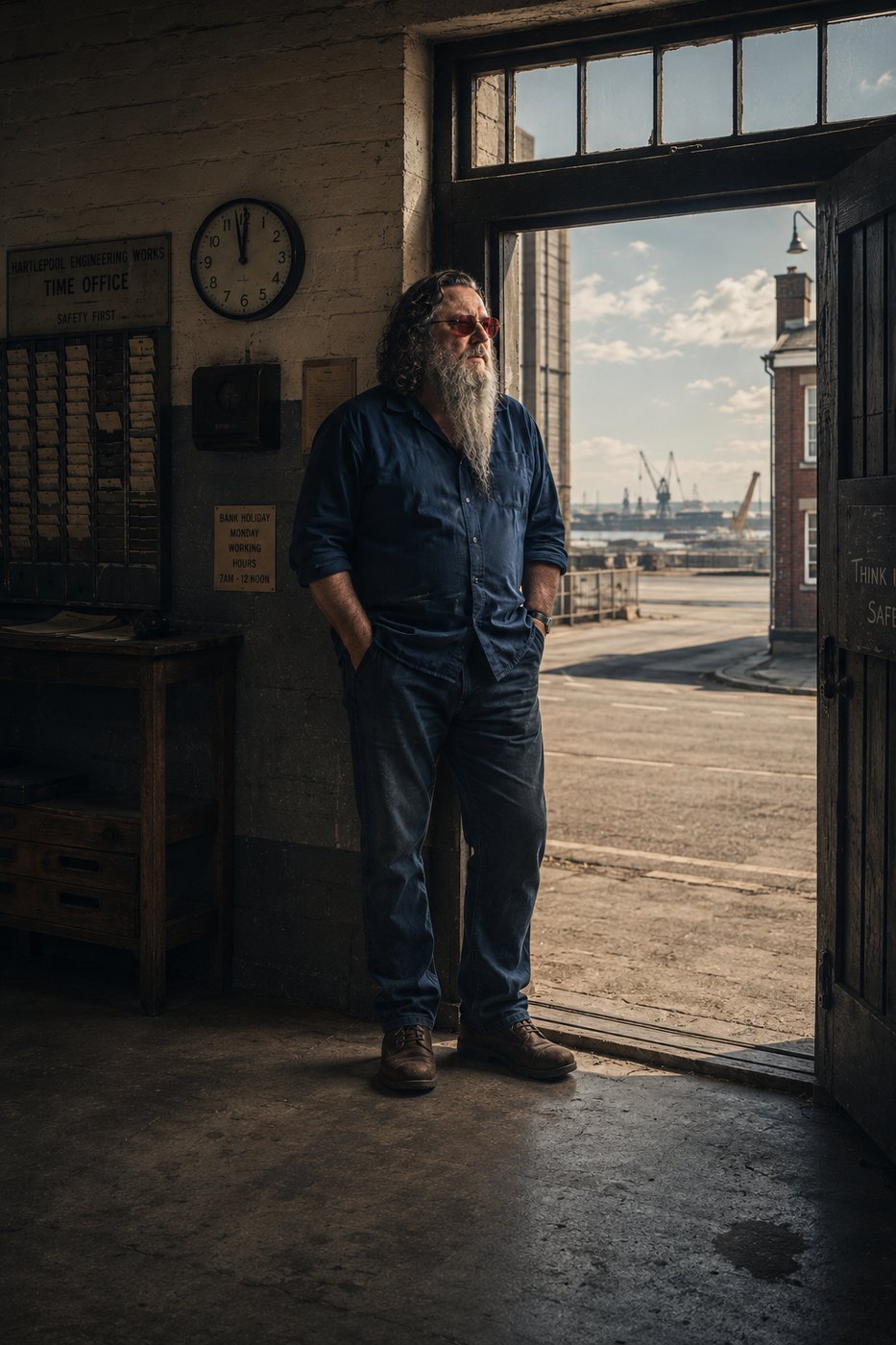
He didn't examine that. Some thoughts you leave shut, green at the tips.
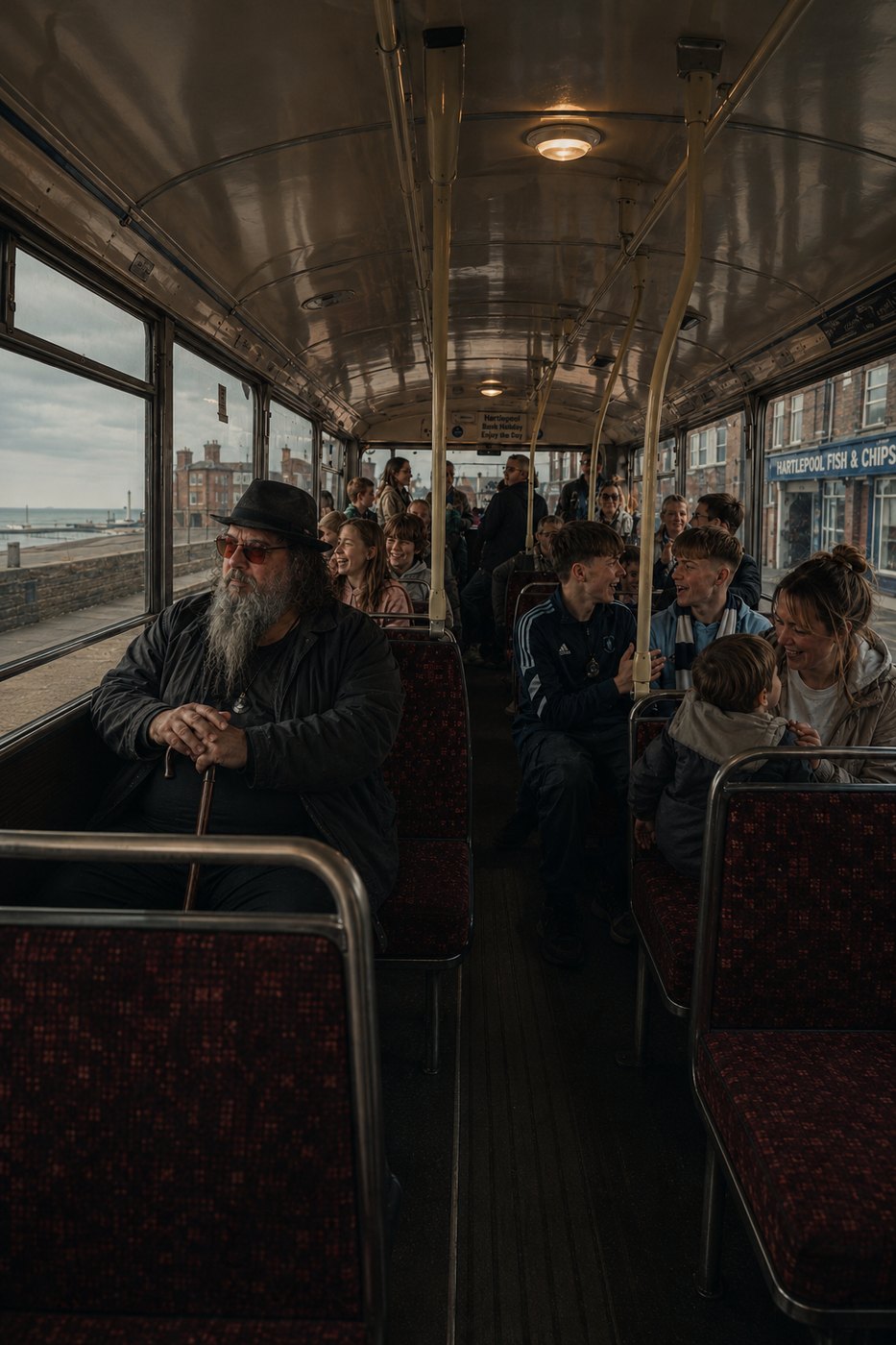
The bus came late and full, and the Easter holidays came with it. The back seats had that end-of-the-world racket that means nothing at all is wrong. Two lads were on about a match, talking over each other, agreeing at full volume. Near the front, yesterday's business was still open — the mug one, the one they'd run out of, the one that had been promised — and the little one put it again with the gravity of somebody owed, her mother's yes falling in the place where yes goes, without listening.
The seat behind the driver took Ted the way it always took him, hands folded on the stick.
He liked the bus. He'd never have said so, but he did. It was the one place left where life sat down next to you whether you'd asked it to or not. Nobody looked at him, and that was all right; being looked at had stopped being on offer around the time he'd stopped expecting it.
The town went by in its bank holiday clothes, and the kids shrieked, and the lads argued, and the egg got secured in principle, and none of it was for him, and all of it reached him anyway.
That was the trade, made so long ago he'd forgotten there was ever a signature. You get it all. You just get it from one seat back.
The town centre had its bank holiday face on. Half the doors shut, the other half propped open to nobody much. The street had room in it for once and didn't know what to do with it. Everyone left in it was going somewhere at the speed of not being spoken to — old habit, kept up without the crowd to excuse it.
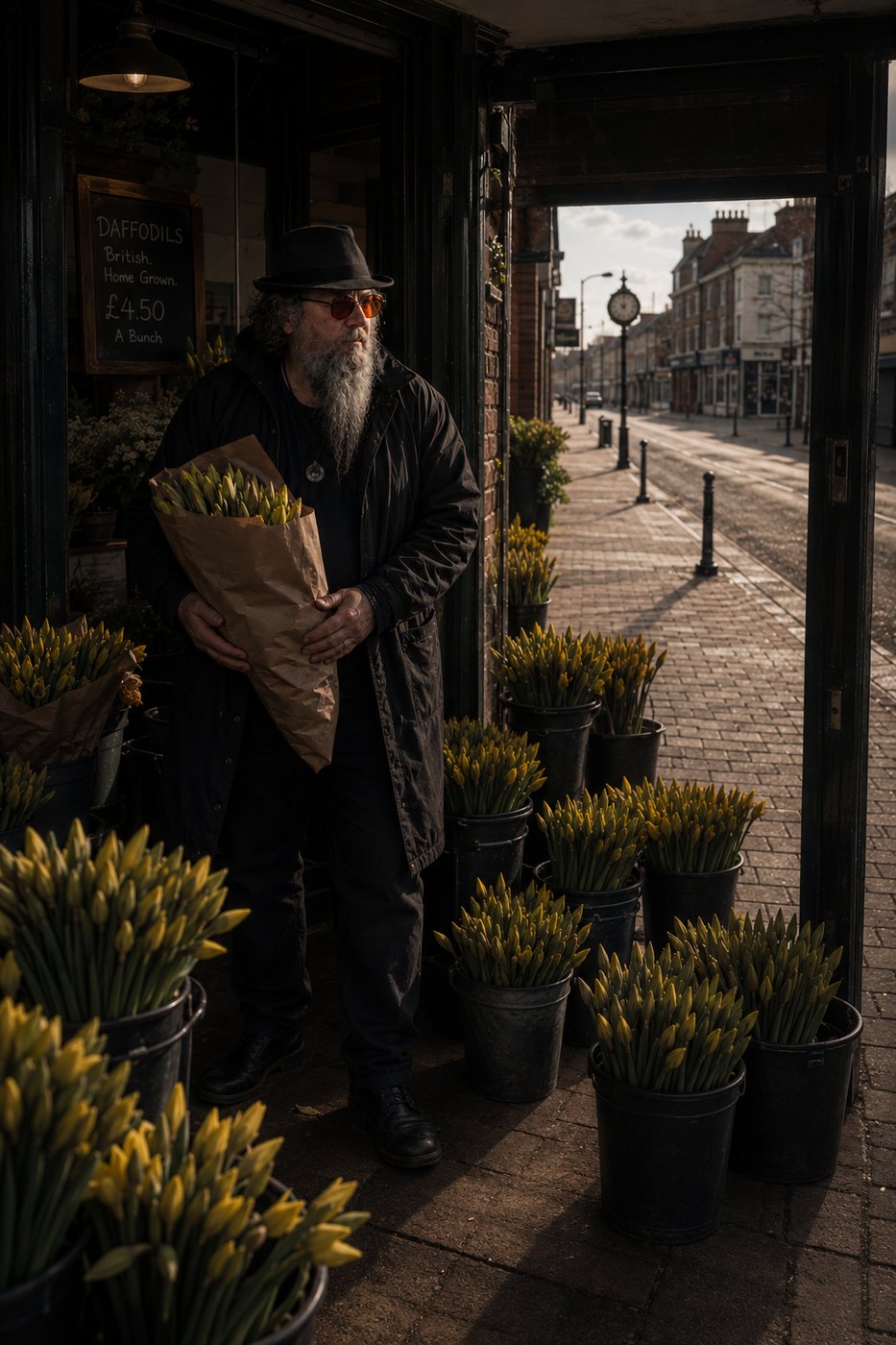
The florist had daffodils in a bucket by the door.
Still shut. Green at the tips, the yellow just starting, like a held breath. Out of the wind they'd open in a day. The bucket held him the way the sea used to hold him, a long time before any mixing. He came away with more than he'd meant to buy.
Yellow doesn't keep, he told the woman at the till, and the smile you give old men came across the counter, and the paper went round the stems with a rustle like weather.
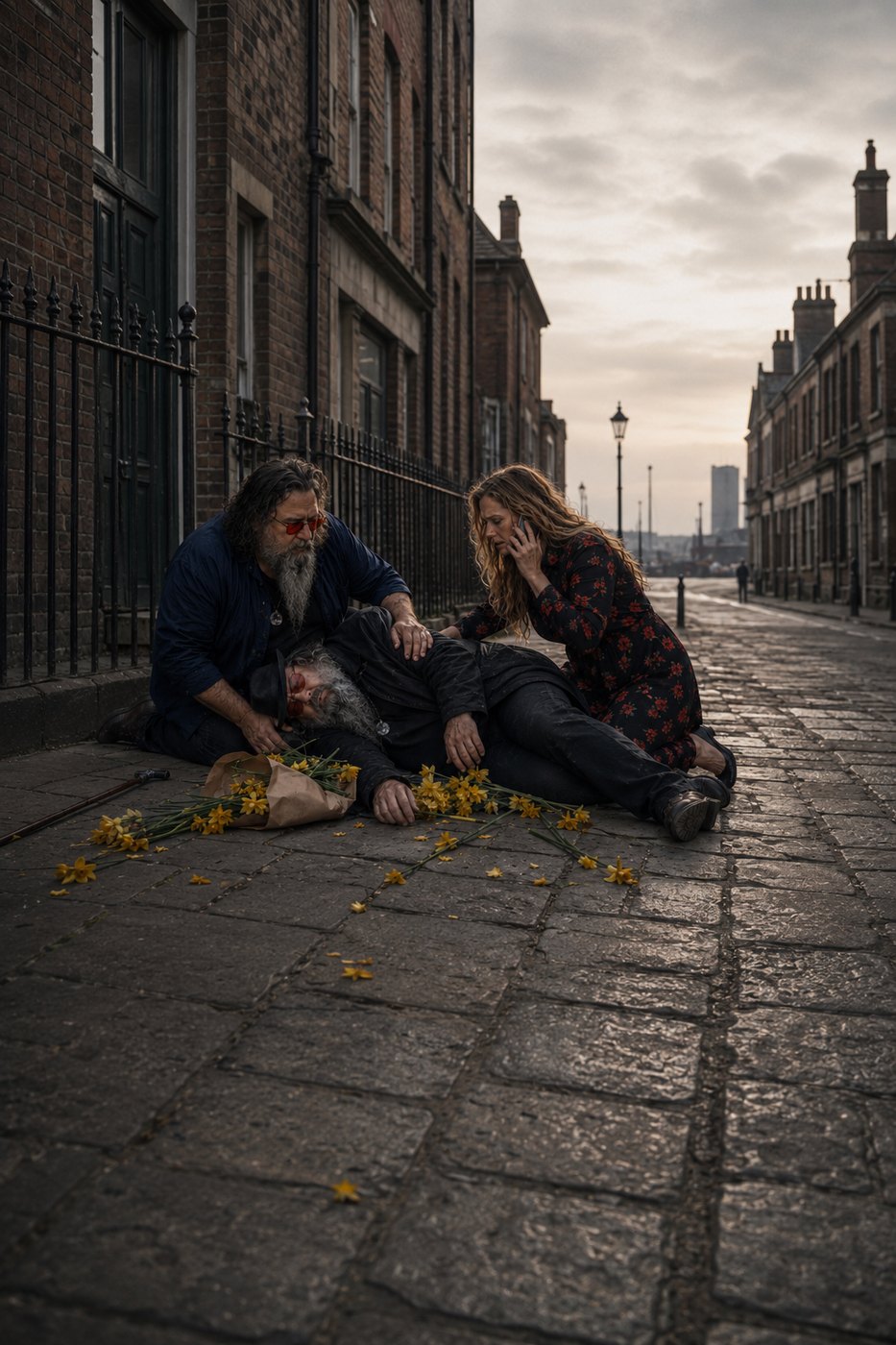
The flowers rode in the crook of his arm.
The light leaned.
The marina let John out at twelve on the dot — the only man in the office, the only office on that side of the water still at it on a bank holiday. Somebody had to, was the official reason. The other reason didn't get asked.
Fifty metres of water between the office and his own front door, and he went the long way round it like everybody else now — up over the bridge, round the back of the docks, twelve minutes in a van to cross a gap you could shout across. There'd been a ferry once. It stopped the year she died. The town had its reasons for that, and the town was wrong about them, the way it generally is. John had never bothered to put anybody right. The true reason was only money, and nobody wants that one.
The blue shirt was on because Monday had a uniform, holiday or not. Lunchtime. The best hour of the day, and hunger had come back to it — hunger like it mattered, like there was something on the other side of the sandwich worth getting back for.
Sleep had taken him right through. Saturday night, Sunday night, both, straight through to the alarm, first time in years. The morning's work had gone quick under him, the stairs quicker, and he was careful not to look at any of that too closely in case it stopped.
Ahead of him, the street lay open in the sun.
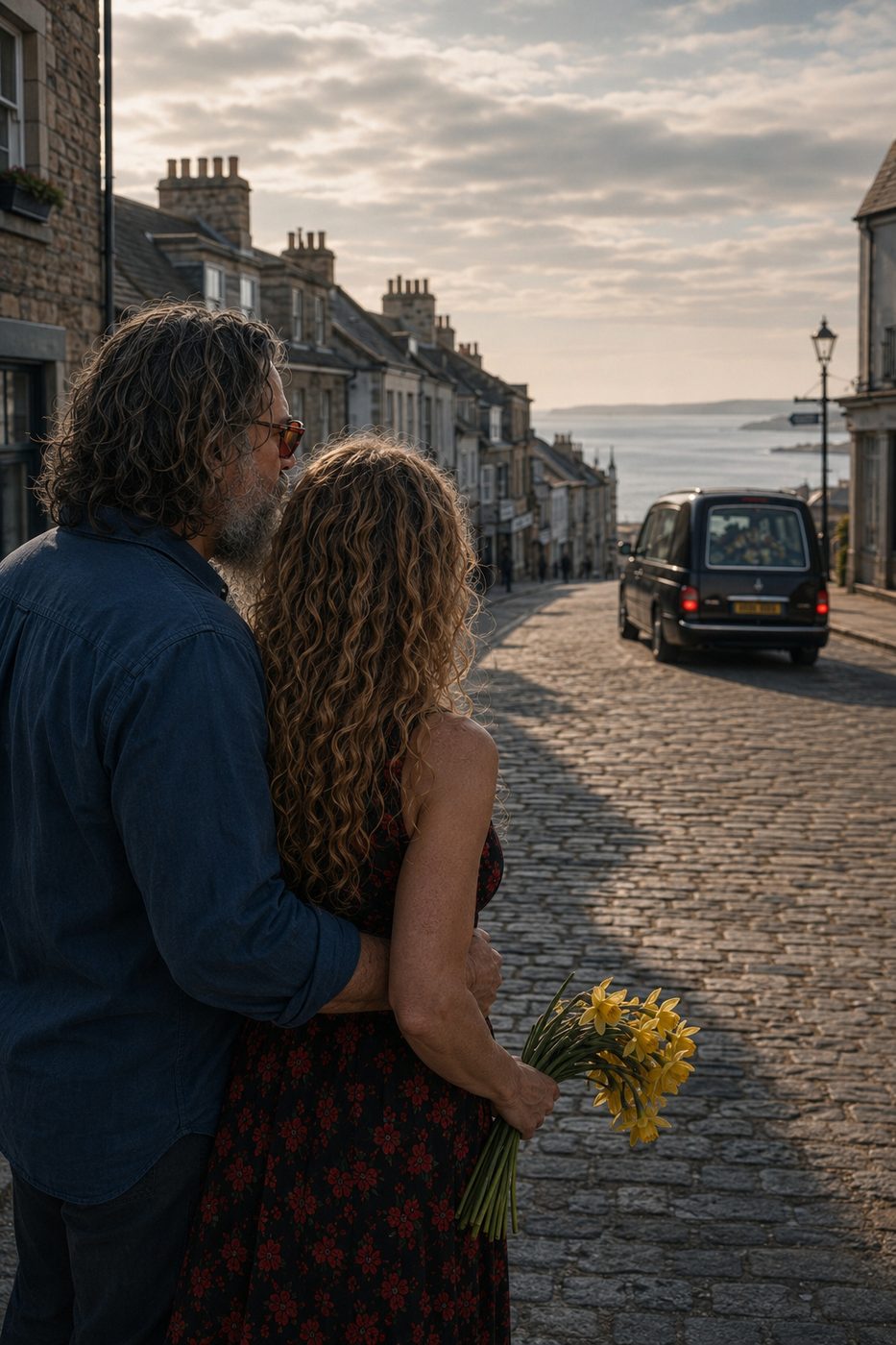
Three shops had taken her in and let her out, the third with nothing, and the corner stood her in the sun while she worked out how she felt about that.
Nothing had happened this morning. That was the news. The alarm had gone off and she had woken up, and that was all — no lurch, no racing, no edge of the bed with the day talked down before it started.
Just morning.
She'd lain there a minute waiting for it to arrive, and it hadn't, and she'd got up almost suspicious.
Since Saturday her breathing had gone the way the sea taught it. Long ones. What she was doing had no name. She just kept doing it.
The dress was the black one with the red flowers, spring on it before spring had properly signed anything, bare-armed and braver than the weather. It had gone on that morning without an occasion, and somewhere around the second shop it had stopped needing one.
The street had room in it today. It made no difference. Full or empty, that street had never once had anyone in it.
Then the corner of her eye caught something falling.
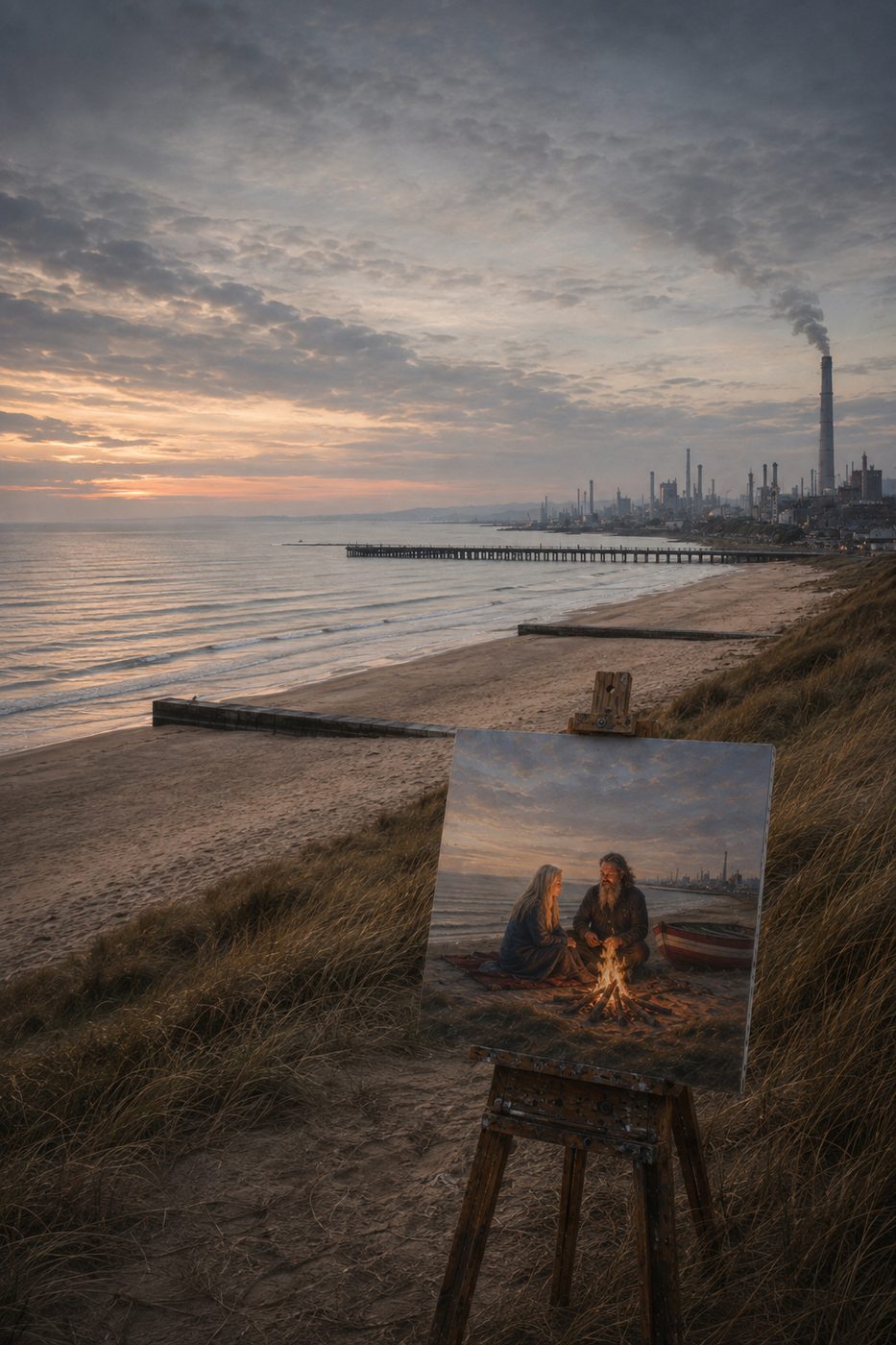
The pavement tilted, and Ted went with it.
The flowers went first. Paper, then stems, then the loose yellow scatter of them across the grey — the one colour in the street, dropped like paint from a height.
The stick went somewhere. The sky swung up between the buildings, a long strip of it, gull-crossed, and the cold came up through his coat from the flagstones with the patience of the sea.
The street walked round him. Two or three, at the speed of errands, with all that room to do it in.
Two didn't.
They arrived in his ears before his eyes, one from each side, and then hands were on him, opening his collar, finding his chest. One pair, then another.
Not gentle. Gentle is for situations with time in them.
Two knees came down on the cold stone either side of him. A voice said "all right, all right," to the street as much as to him. Another voice gave a phone the name of the street, twice, the second time slower.
Blue sleeve. Red flowers on black.
He knew them.
Not by name.
By weight.
The man from the edge of things, close up, collar and tie, salt nowhere on him and the sea all over him anyway. The woman in her best hope, dry, on dry land, kneeling in it.
Two days ago they had been figures by a fire, small, and completely warm, and the beach he painted them had no place on it for him. Now the picture had crossed the distance and got its hands on him, and everything it had, it was pressing into his chest in counts of thirty, telling him to stay.
The daffodils lay where they'd landed. Still shut. A day from opening.
He would have told them it was all right. It was Monday. The sun was out and the chill was in. They were holding him like he mattered, and they did not know each other yet, and summer was coming, off behind the light somewhere.
There are worse rooms to leave by.
Somewhere in the counting, he stopped needing it.
The hands kept on for a while. Hands are the last to be told.
Then they slowed, and stopped, and the street went on around the three of them.
She looked up. He was already looking.
"It's you."

Free if you need it. The jar's there if you want to keep the lights on.


Nothing playing